Athens neighbourhood guide
Petralona, Athens: the hill neighbourhood where old Athens still lives
A walk through Petralona’s tavernas, hill paths, open-air cinema and low-key bars, where the city feels lived-in rather than staged.
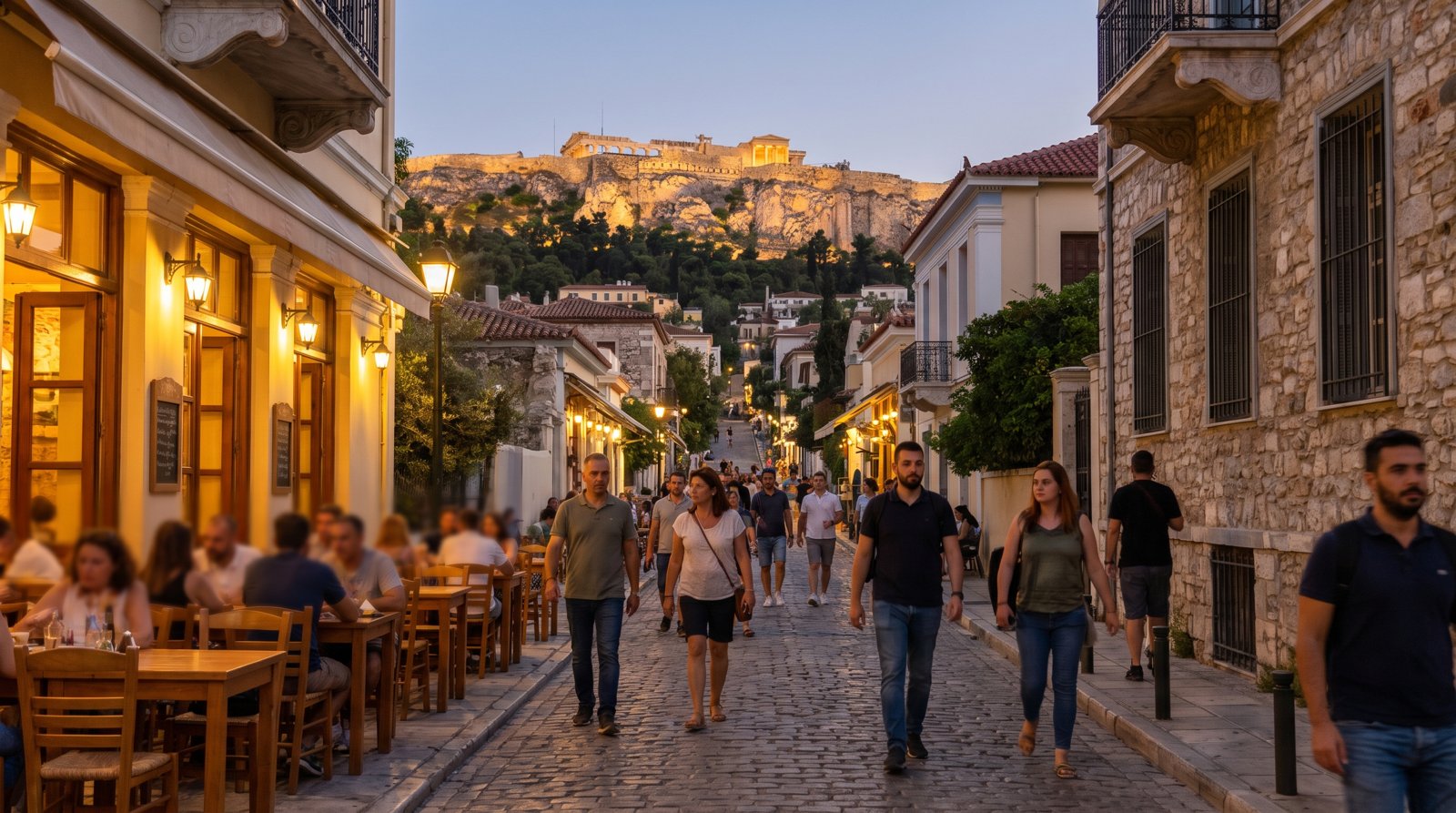
Follow Troon Street uphill from Merkouri Square on a warm evening and Petralona gives itself away in fragments: a century-old taverna with pots on the stove, a Thai kitchen full of an arty crowd, a dive bar pouring cocktails, and — later, when the light thins — an open-air cinema under jasmine. This is the old working-class hill on the far side of Filopappou, close enough to walk to the Acropolis and stubbornly ordinary in the best possible way. It is a neighbourhood of domestic sounds and small loyalties, where the green-line train rattles below, church bells mark the hour, and the evening is measured in plates being cleared rather than in reservations scored.
What Petralona is known for
Petralona is known first for being itself: an unforced, lived-in Athenian district that never got polished into a tourist set. It sits on the western slopes of Filopappou Hill, which means the neighbourhood’s back garden is one of the city’s great public viewpoints, a place where the Acropolis appears not as a distant monument but as a daily companion. That geography matters. It gives Petralona a slope, a breeze and a horizon, but it also gives it a certain self-confidence. People live here, eat here, argue here, and then walk up the hill for sunset as if it were the most natural thing in the world.
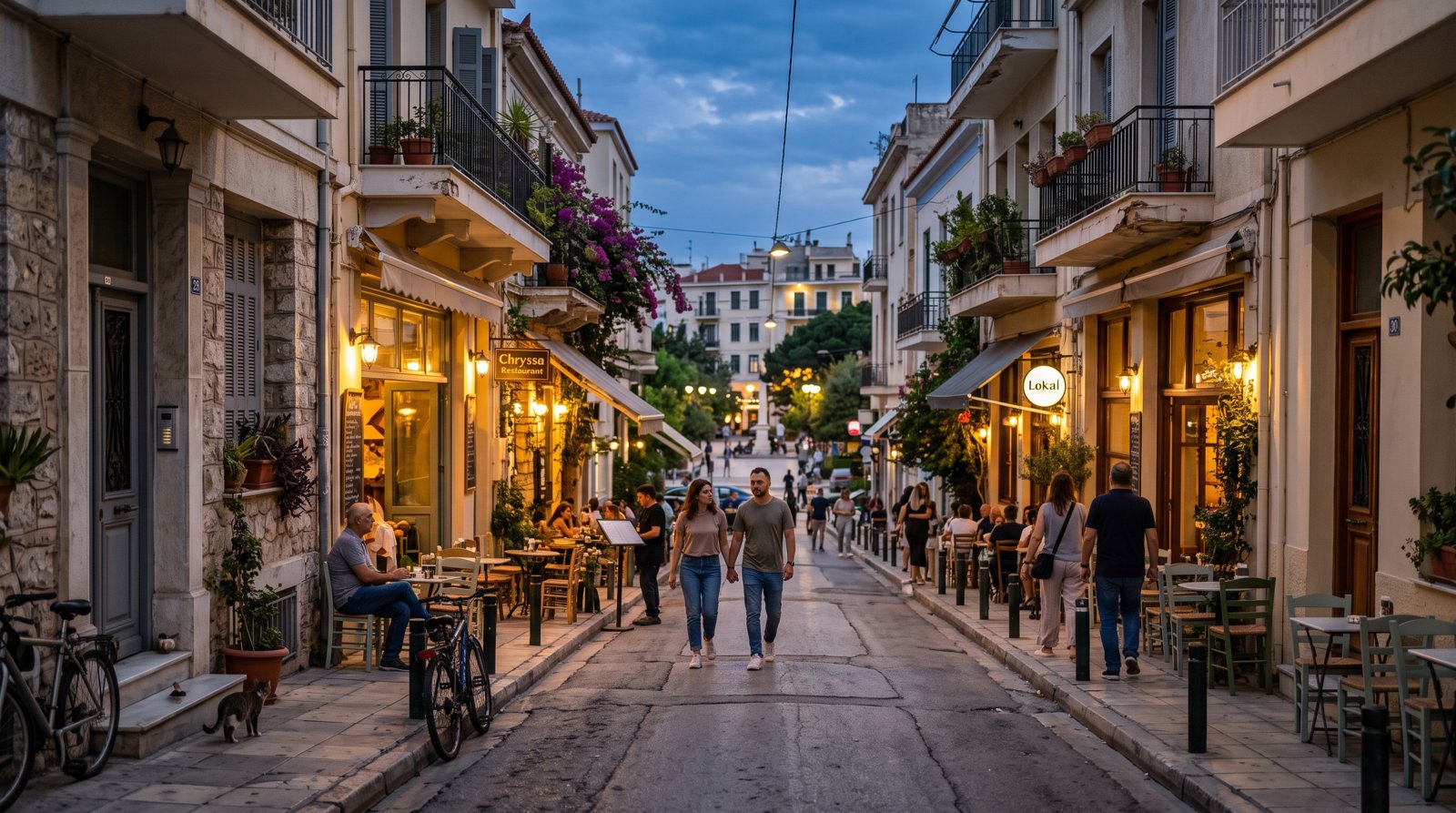
The neighbourhood’s reputation still rests on the taverna, especially the old-school kind that serves cooked food rather than performance. Oikonomou, on Kydantidon in Ano Petralona, has been doing that since 1930, which is to say it has outlived fashions, diets and several versions of Athens itself. The place has become shorthand for Petralona’s character: no fuss, no tourist choreography, just a kitchen with confidence. Around it, the district continues to feel residential in the most reassuring sense. You still see pensioners on kitchen chairs outside their doors and cats asleep on marble steps. Refugee-era apartment blocks and grill-smoke tavernas remain part of the texture, and the new arrivals — artists, designers, musicians, remote workers — have generally come for the same reason everyone else does: the walkability, the slope, the ordinary life, the fact that the city centre is close but not intruding.
That mix of old and new is what put Troon Street on Time Out’s list of the world’s coolest streets in 2024, ranked 28th. It was not praised for glamour. It was praised for the collision of scruffy old-Athens charm with new bars, cafés and modern kitchens. That is exactly Petralona’s trick: it is not trying to become something else, and yet it keeps absorbing new energy without losing the bones of the place.
Where to eat & drink
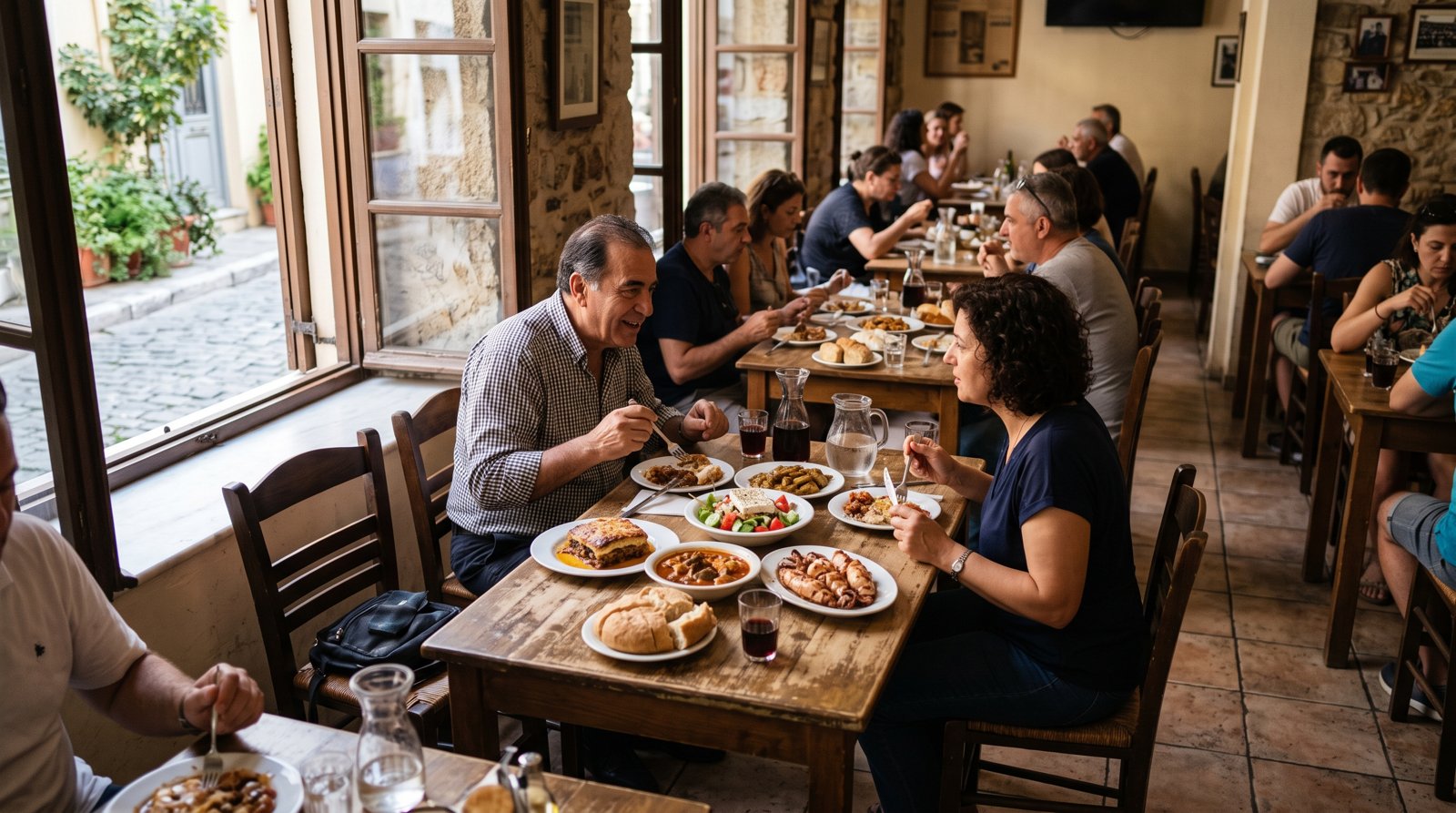
Start with the institution that explains the neighbourhood better than any essay could. Oikonomou, at 32 Kydantidon in Ano Petralona, has been serving real cooked Greek food since 1930, and the ritual is part of the pleasure: there is barely a menu, so you ask what is in the pots and let the day decide. Roast lamb with lemony potatoes. Rabbit stifado. Dolmades. Ladera. This is the kind of cooking that makes sense after a long walk, the sort that tastes as if it has been simmering in the neighbourhood for generations.
If Oikonomou is the old Petralona story, Kappari is the newer one told in a softer voice. Housed in a converted old house with a garden on Dorieon, it has been there since 2007, cooking modern Greek dishes that shift with the seasons. It is the sort of place that reminds you Petralona is not frozen in nostalgia; it is still making room for contemporary Athens, just on neighbourhood terms.
For a more specific regional identity, Taverna Diomataris on Dimofontos is the Cretan table in the district. Graviera cheese and tsikoudia come from the owner’s own farm, and in summer the rooftop gives the meal an extra layer of ease. On Sunday afternoons, small Cretan bands turn the place into a local event rather than a destination restaurant. It is the sort of detail that makes a neighbourhood feel inhabited rather than curated.
Then there is Blue Bamboo at 24 Kydantidon, which has quietly become part of the Petralona furniture. It has done Thai here for years, with reliable red and green curries, larb gai and pad Thai, and a bill that lands around €20–25 a head with a drink. In a district so closely associated with Greek food, its longevity says something important: Petralona is comfortable enough in itself to make room for a long-running Thai kitchen and not treat that as a contradiction.
Chryssa on Eoleon is the gentler, slightly more polished option, but it still feels rooted in the neighbourhood rather than lifted from elsewhere. Think fava with capers, chicken souvlaki and homemade cheesecake, the sort of menu that can carry an unhurried lunch or an early dinner without making a fuss about it.
At the higher end, Herve is the surprise that reminds you Petralona can still catch you off guard. This Michelin-starred chef’s-table restaurant serves a long French-Greek-Asian tasting menu, and it is very much a book-ahead destination. In a district built on understatement, Herve is the sharpest contrast — but because it sits inside Petralona rather than above it, it feels like a local anomaly rather than a transplant.
For a drink after dinner, Klouvi at 21 Kydantidon is the neighbourhood’s dependable nightcap. Its name means “cage”, though the room has been revamped without losing its dive-bar spirit, and the cocktails are taken seriously. It is the sort of bar that suits Petralona’s scale: small, unpretentious, and happy to let the conversation do the heavy lifting.
Going out
Petralona is not a nightlife district, and that is precisely why it works. There are no clubs and no strip. A night out here means a lingering taverna dinner that slides into a beer or cocktail, then perhaps one more stop before the walk home. The centre of gravity is Merkouri Square and the run of Troon Street above it, where all-day cafés become bars after dark and the music leans alternative, rock and soul rather than anything mainstream or loud.
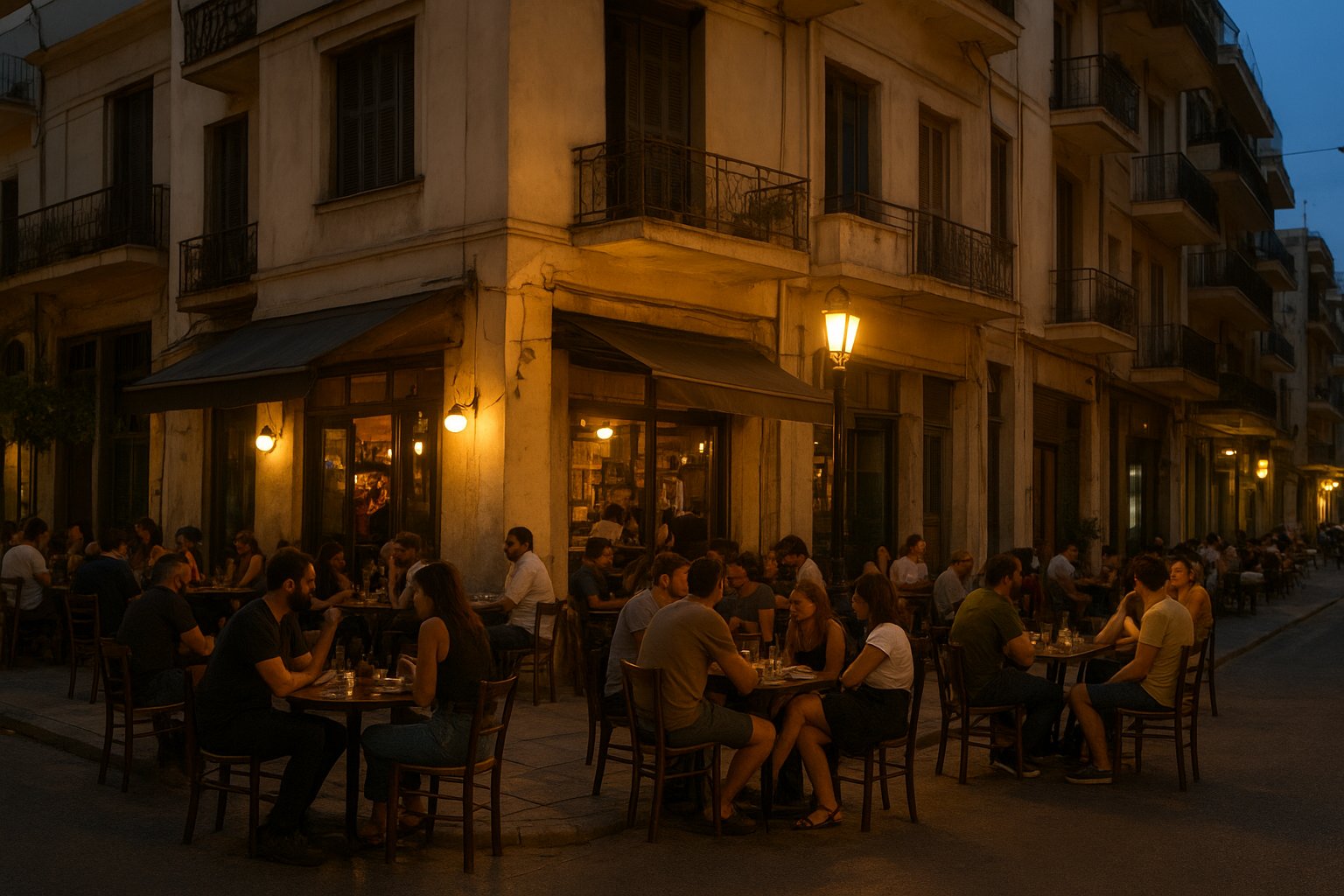
The appeal is in the scale. You are not chasing a scene so much as joining a neighbourhood rhythm. The room at Klouvi stays low-key and late, and the Troon Street cluster has the easy-going spill-onto-the-pavement feel that Time Out singled out. It is the kind of place where you end up talking to the next table, or to the bartender, or to nobody in particular while the street hums around you. If you want a bigger night, Thissio is a short walk or one green-line stop away, and Psirri and Gazi are not far beyond that. But Petralona itself is where you come back to for the last drink, the quieter cadence, the sense that the evening has not been engineered.
Things to do / what to see
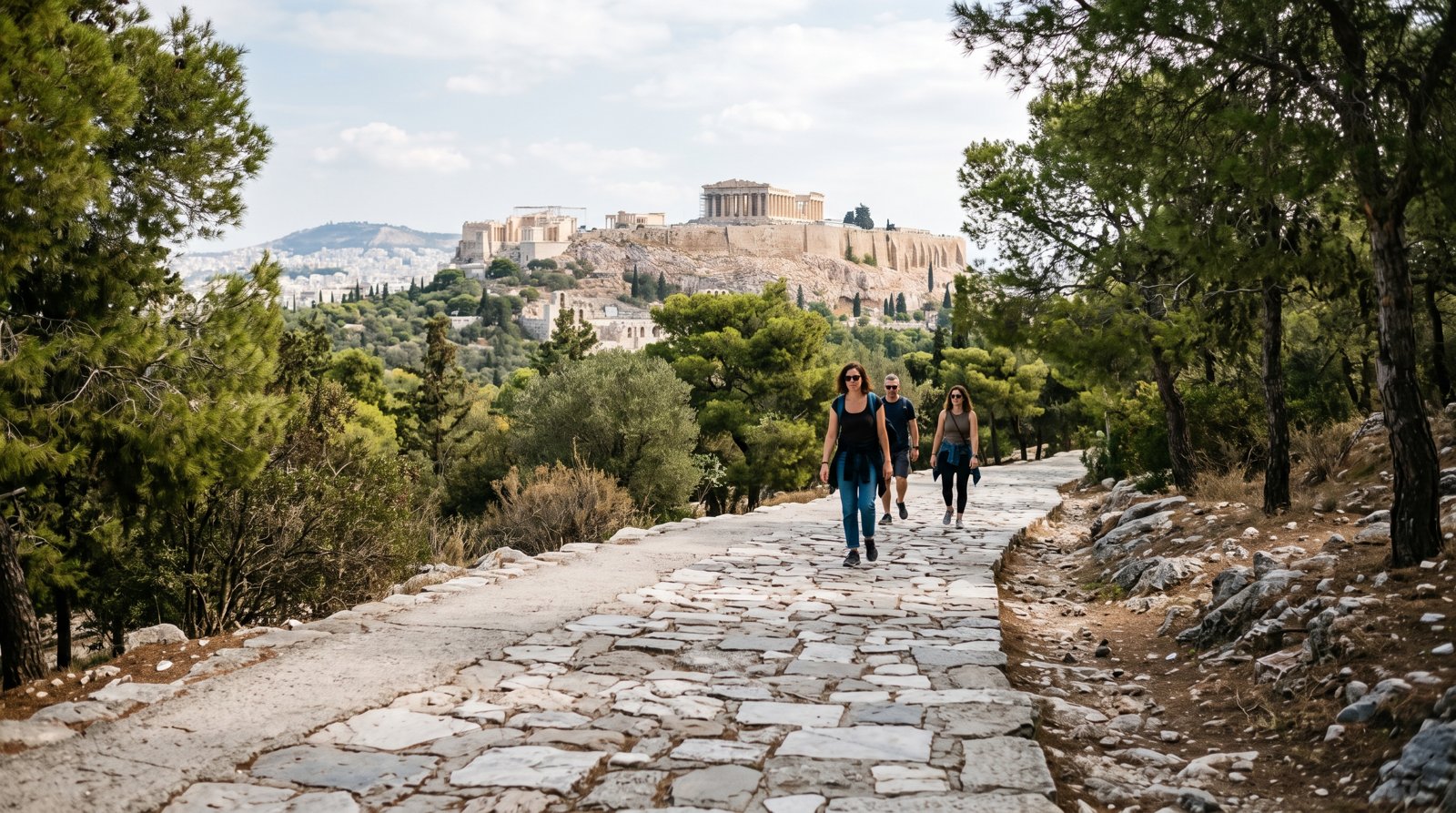
The single best thing to do in Petralona is to climb Filopappou Hill, also spelled Philopappou, which rises on the neighbourhood’s eastern edge like a public invitation. It is free, always open, and the reward is one of the city’s defining views: the Acropolis at eye level, unobstructed, often judged better than Lycabettus, especially at sunset when the Parthenon takes on that impossible gold. This is Athens at its most democratic — no ticket, no queue, just a path upward and the city opening out beneath you.
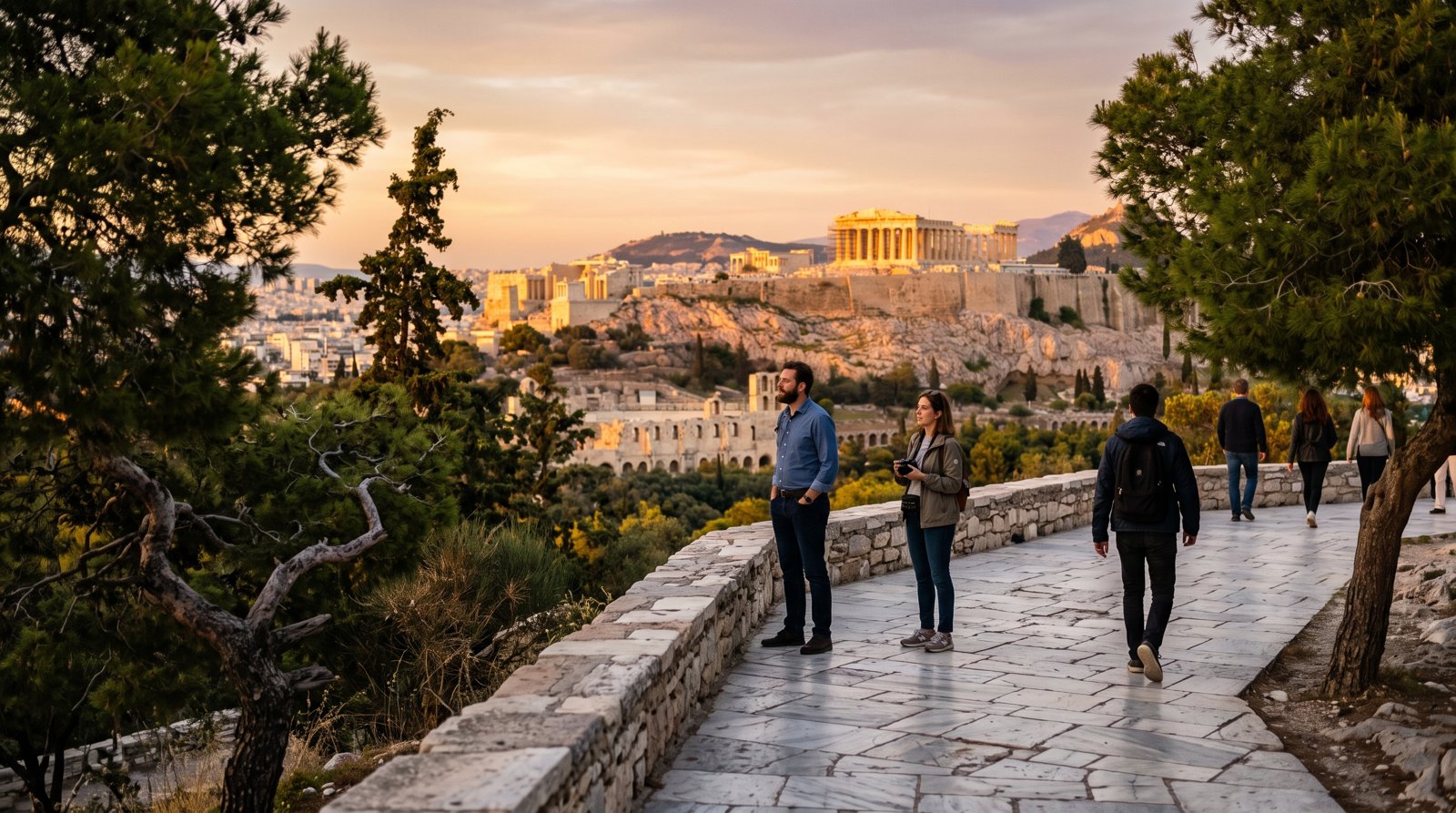
On the way up, the hill unfolds in layers. The Church of Agios Dimitrios Loumbardiaris is a lovely 16th-century church on the path, restored by Pikionis, and it has the quiet authority of a place that has watched the city change without ever needing to announce itself. Nearby, the Pikionis Paths are as much an attraction as the viewpoint itself: hand-laid stone-and-marble walkways from the 1950s, a landmark of modern Greek architecture and one of those rare civic gestures that feels both practical and poetic.
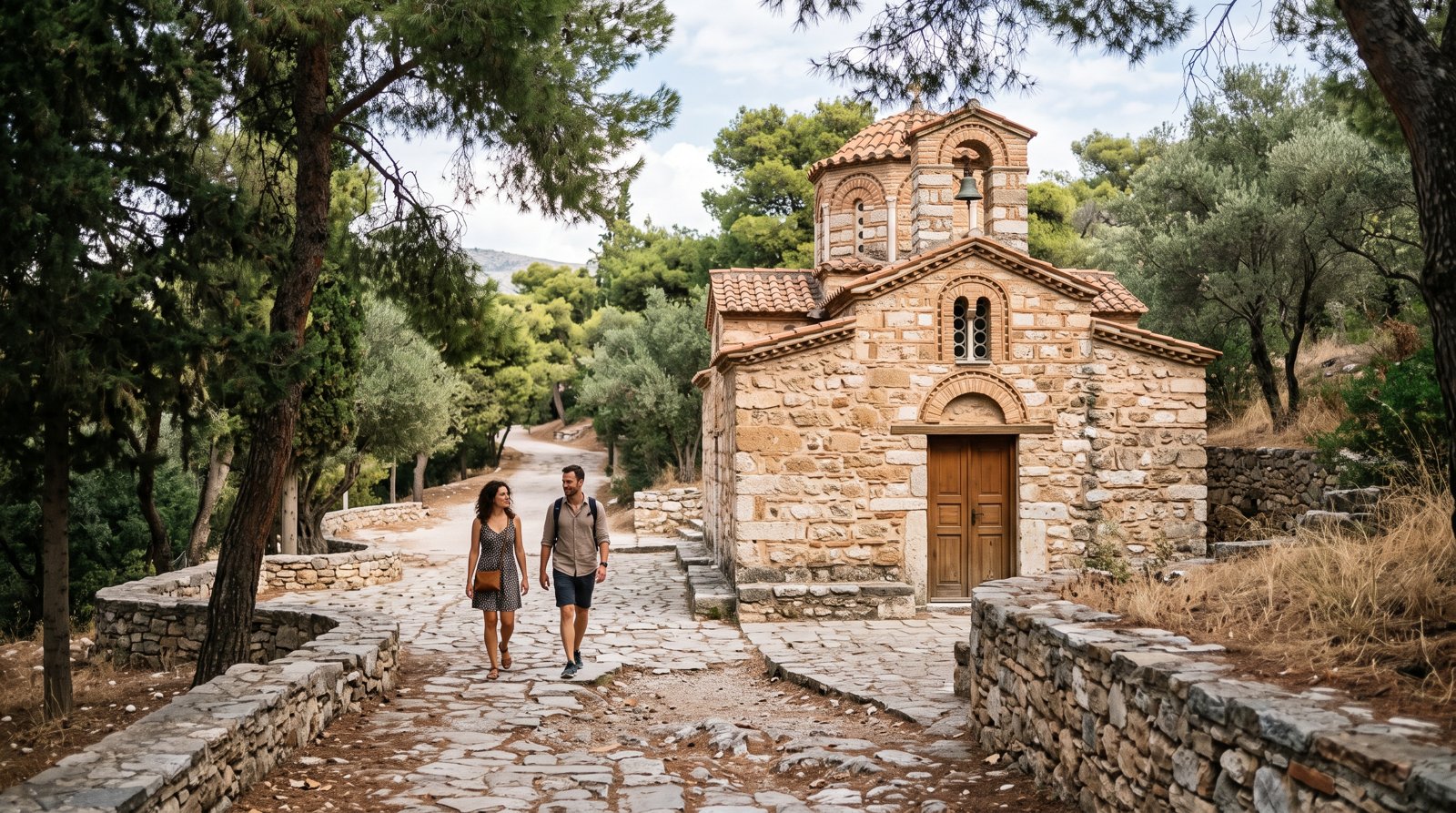
At the summit, the Monument of Filopappos, built in AD 114–116, crowns the hill and gives the walk a historical finish. But the real pleasure is the descent back into ordinary Petralona: the quiet lanes of Ano Petralona, the small squares, the cafés of Troon Street, the sense that the neighbourhood has not ended at the hill but simply changed register.
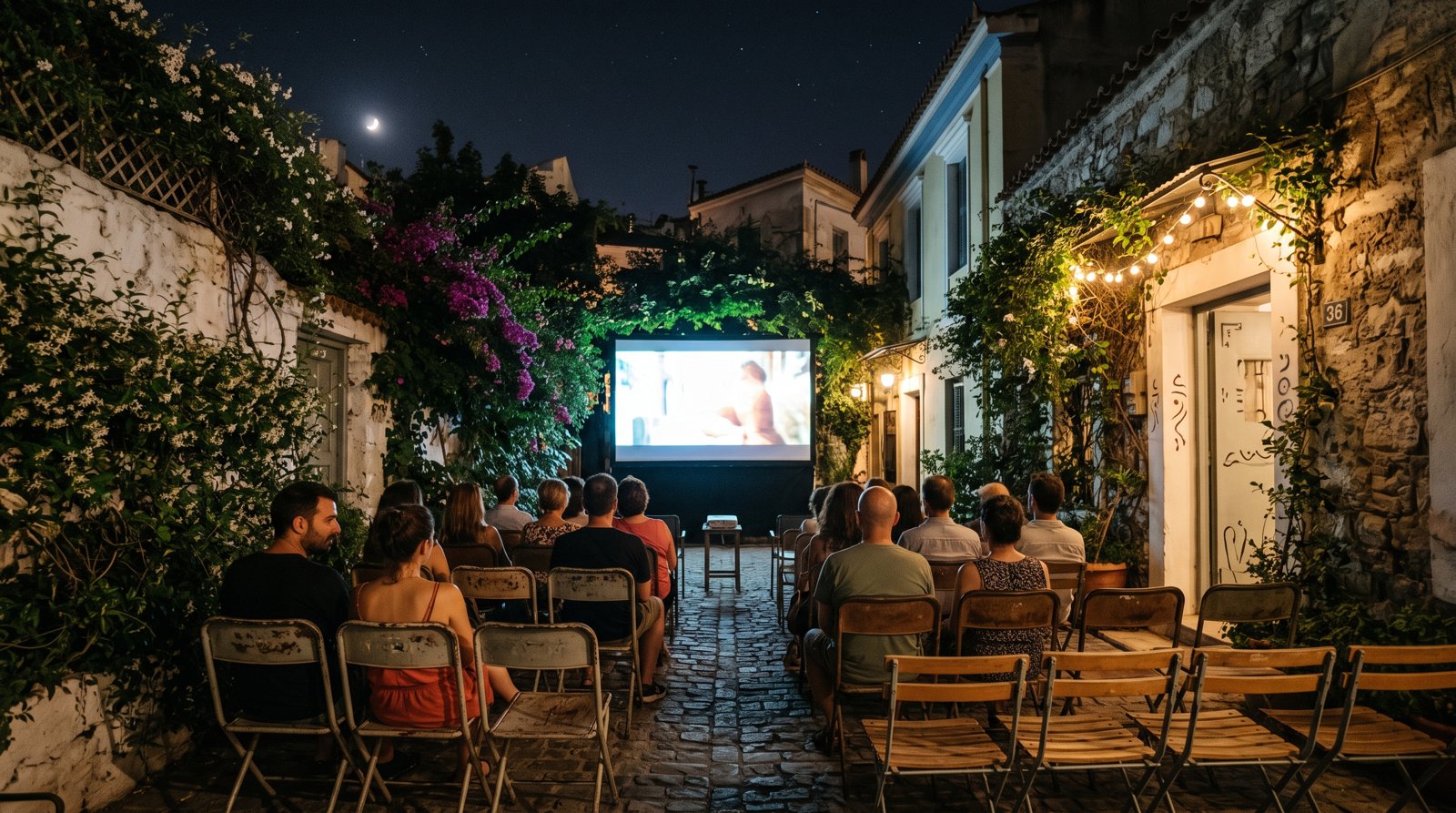
On summer evenings, Cine Zefyros at 36 Troon is the other Petralona classic. It is one of Athens’ oldest and most-loved open-air cinemas, showing classics, documentaries and world cinema under the stars from roughly May to late September, usually with screenings around 21:00 and 23:00. The setting does a lot of the work: a film, a warm night, the open sky, the sense that cinema is still a communal act.
Don’t miss in Petralona
Troon Street, the culinary spine of the neighborhood.
Zefyros, a classic open-air cinema operating since the 1930s.
Shopping & markets
Petralona is not a shopping destination, and that is part of its appeal. There is no boutique strip to perform for visitors. What the neighbourhood does have is the weekly laiki agora, the open-air farmers’ market that takes over a residential street with fruit, vegetables, fish, olives, cheese and cheap flowers — the way Athenians actually shop. If you are self-catering, it is worth timing a morning around one of these markets; if not, it is still worth seeing local life at its most unfiltered. The exact day and street rotate by block across the district, so ask your host where it is happening.
Beyond that, Troon Street and the lanes around Merkouri Square have picked up a scattering of small independent spots as the neighbourhood has shifted: the odd bookshop-café, record and design corners, and neighbourhood bakeries and delis. It is retail at human scale, the kind that appears because people live here, not because a district was planned to be consumed.
Where to stay in Petralona
Petralona is a place to stay if you want a real neighbourhood rather than a hotel district. The trade-off is straightforward: you get local streets and lower prices, but the choice of places to sleep is thinner, and most options are apartments and small guesthouses rather than big hotels. That is part of the charm, provided you know what you are signing up for.
Base yourself in Kato Petralona, near the Line 1 station, if you want the easiest metro access and the most cafés on your doorstep. Choose the quieter lanes of Ano Petralona, up toward Filopappou, if you want village calm and the sunset hill close by. The area around Troon Street and Merkouri Square puts you in the middle of the eating and drinking. Wherever you land, you are within a 15–20-minute walk of the Acropolis and Thissio, which means you can keep the sights close while paying neighbourhood rather than tourist-centre rates.
Where to stay here
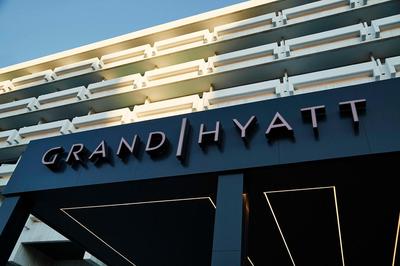
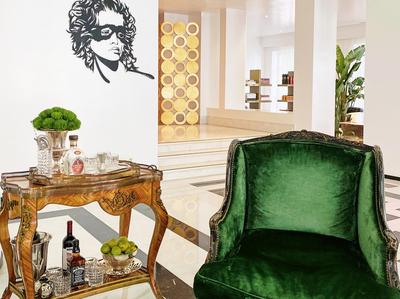
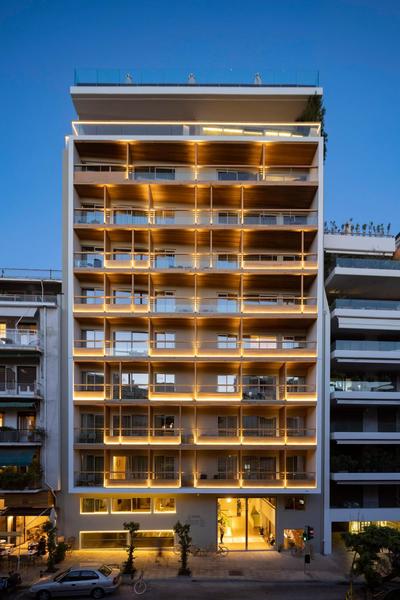
Hotels in Petralona
Our best-rated stays in this neighbourhood. Prices are approximate “from” rates — confirmed at the provider when you continue. We may earn a commission if you book through our partners — at no extra cost to you.
 In this area
 In this area
 In this area
Getting around
Petralona is easy to reach and easy to read once you are here. Petralona station sits on Line 1, the green line, at Thessalonikis and Dryopon streets in the lower part of the neighbourhood. From there it is two short stops to Monastiraki in the centre, where you can change for Line 3 to the Acropolis area, and a straight run the other way to Piraeus. On foot, the neighbourhood is a 10–15-minute walk from Thissio and roughly 15–20 minutes to the Acropolis and Koukaki, with the route mostly flat down in Kato Petralona and steeper as you climb into Ano Petralona and up Filopappou.
For the airport, the simplest route is Line 3 from Monastiraki direct to Athens International, about 45–50 minutes end to end. The airport metro runs on a limited timetable, so check times, or take a taxi. Within Petralona itself, you will not need transport. It is small, walkable and best experienced on foot, ideally with no fixed plan beyond a meal, a hill and perhaps a film under the stars.
Petralona rewards travellers who like a city to stay in character. It is not trying to impress from a distance. It is better than that: a neighbourhood that keeps its working-class memory, its ordinary rituals and its local confidence, while quietly making room for the new. Spend an evening here and the appeal becomes clear. The hill, the taverna, the cinema, the train, the cats on the steps — they add up to a version of Athens that still feels inhabited, not packaged.
Good to know
Petralona — your questions
Is Petralona a good area to stay in Athens?
Yes — if you want a quieter, genuinely local base rather than a hotel district. Petralona is on Line 1 and only a short metro hop or a 15–20-minute walk from the Acropolis, Thissio and Monastiraki, so the sights stay close while you sleep in a real neighbourhood of tavernas and everyday streets. The trade-off is fewer hotels, with most accommodation being apartments and guesthouses.
What is Petralona known for?
Petralona is known for old-school Athenian tavernas, especially Oikonomou, which has been going since 1930, and for its position on Filopappou Hill, home to one of Athens’ best free views of the Acropolis at sunset. It’s also become one of the city’s quietly cool neighbourhoods, with Troon Street making Time Out’s 2024 cool-streets list.
How do I get from Petralona to the Acropolis?
It’s about a 15–20-minute walk, mostly flat, heading toward Thissio and then along Dionysiou Areopagitou to the Acropolis entrance. You can also take Line 1 from Petralona to Monastiraki in two stops, then continue on foot or change for Line 3 if needed.
Does Petralona have nightlife?
Not in the club-heavy sense. Petralona’s evenings are built around long dinners, cocktails and low-key bars, especially around Merkouri Square and Troon Street. It’s a neighbourhood for conversation, not a big nightlife strip.
Gallery