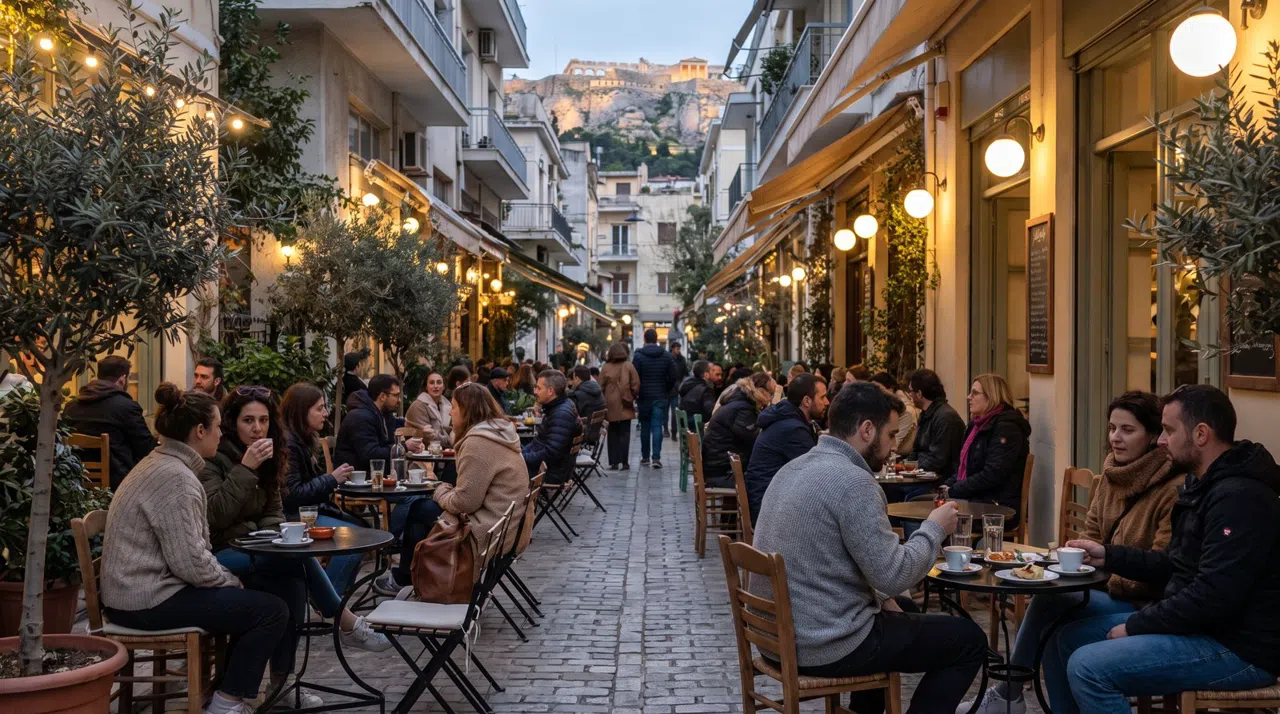
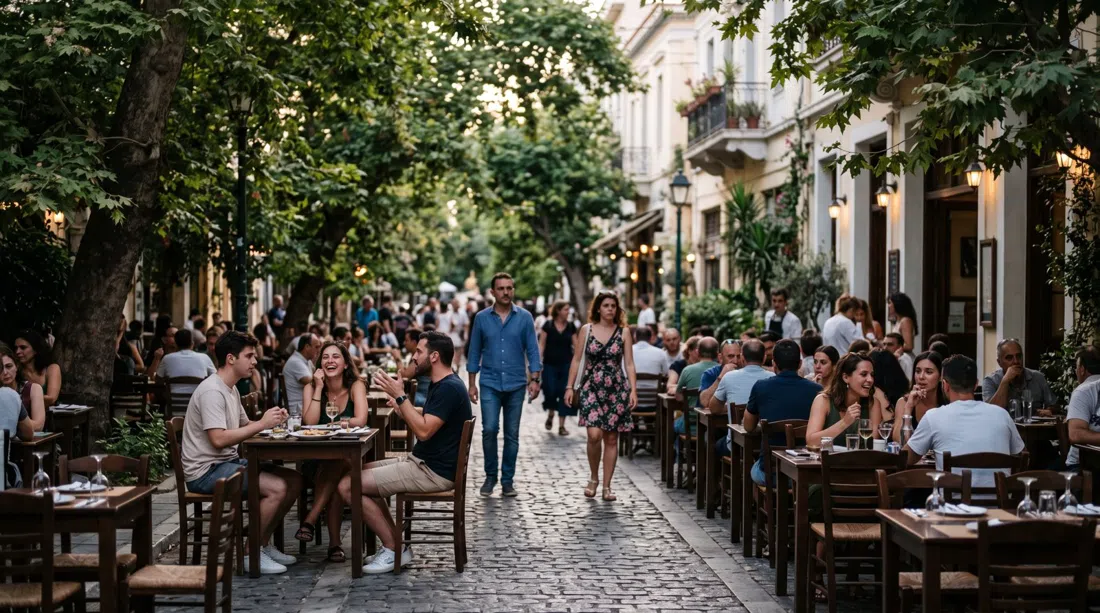
Koukaki announces itself at street level: tables under plane trees on Georgaki Olympiou, the low hum of conversation drifting out from a wine bar on Falirou, and the Acropolis still close enough that you can feel its pull without being swallowed by it. This is the part of Athens where the day can begin with a museum visit, pass through a bakery and end with a glass of biodynamic white in a converted garage. It is residential first, fashionable second, and the balance is what gives it its charm.
What Koukaki is known for
The neighbourhood sits directly below the south slope of the Acropolis, bounded roughly by Dionysiou Areopagitou to the north, Filopappou Hill to the west and Syngrou Avenue to the east. That geography is the whole story and then some: Koukaki is close enough to the ancient centre to make sightseeing effortless, but just far enough away to avoid the crush that gathers around the obvious addresses. You can walk to the Acropolis Museum, wander back for lunch, then return for a sunset climb on Filopappou Hill without ever needing to think about transport.
What has changed over the past decade is the food. Koukaki has become Athens’ most talked-about eating-and-drinking postcode, a place where natural-wine bars, modern bistros and small, sharply defined kitchens have settled among old kafeneia, bakeries and apartment blocks with balconies full of washing and bougainvillea. The result is not polished glamour. It is better than that: a neighbourhood with a resident rhythm, where the tables are filled by people who live nearby, work nearby or have made the detour because they know the good rooms are down here.
On Georgaki Olympiou and Drakou, both pedestrianised, the canopy of plane trees, jasmine and palms turns the streets into green tunnels rather than roads. In the evening, the strip from Koukaki Square becomes one long leafy terrace, and the mood is easy, sociable and unhurried. It is the sort of place where Athens seems to lean back. The city’s old certainties are still present — the Acropolis, the museum, the ancient paths — but they now have a contemporary counterpart in the bars and dining rooms below them.
Where to eat & drink
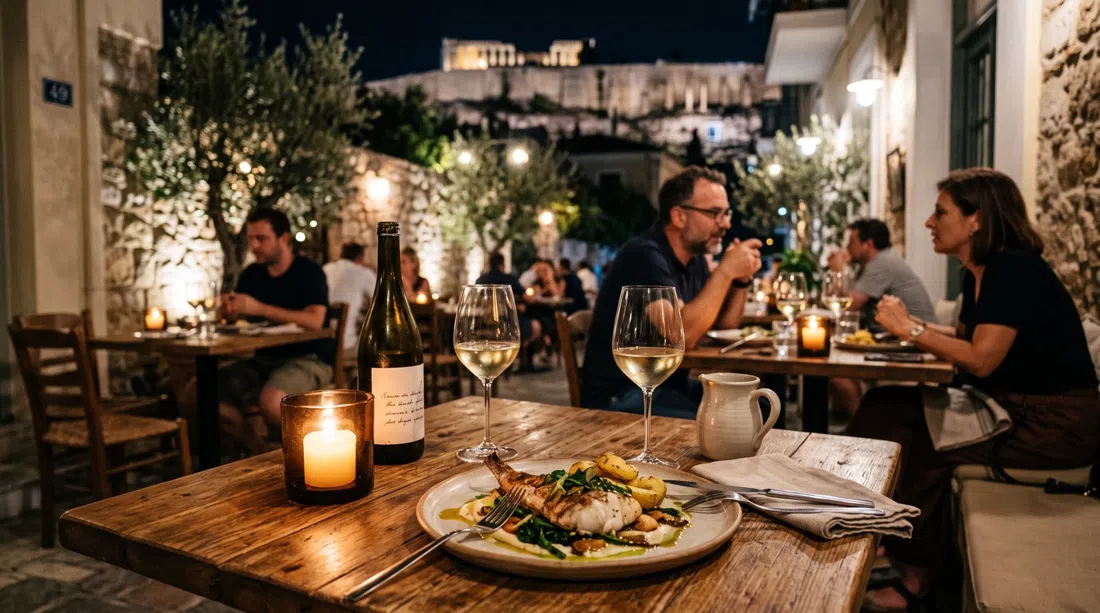
If Koukaki has a headline, it is dinner. The neighbourhood’s food scene is reason enough to base yourself here, and it rewards the kind of traveller who plans the day around the evening meal. At the top end, Gallina on Markou Botsari 49 is the table that says the neighbourhood has arrived. Michelin-recognised and Nordic-French-Greek in spirit, it is the work of chef Pavlos Kyriakis, and the menu moves with confidence between precision and comfort. Monkfish in a vine-leaf beurre blanc is the sort of dish that tells you exactly what kind of room you are in, while the wine list — more than 700 labels, with roughly 40 by the glass — makes it clear that this is not a place where the bottle is an afterthought.
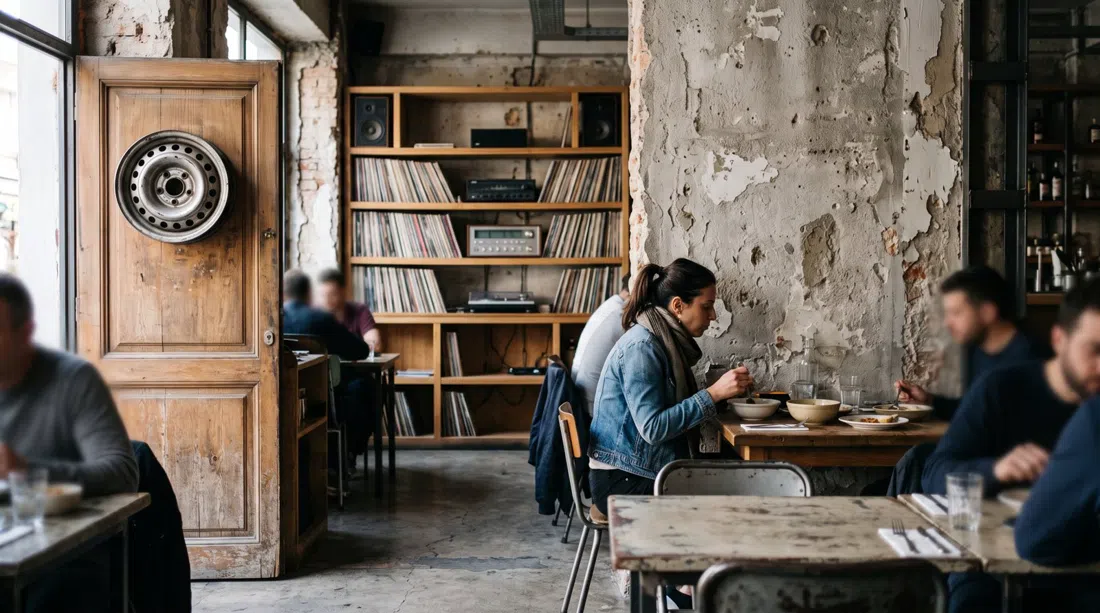
A short walk away, Voulkanizater takes a former tyre-repair shop and makes a point of the transformation. The name itself, the Greek for tyre repair, keeps the history in view, but the mood is all industrial hi-fi: raw walls, a wheel rim on the door, vinyl on the soundtrack and seasonal Mediterranean cooking from award-winning chef Thomas Matsas. It is one of those rooms that feels both deliberately rough and carefully composed, and that tension suits Koukaki well.
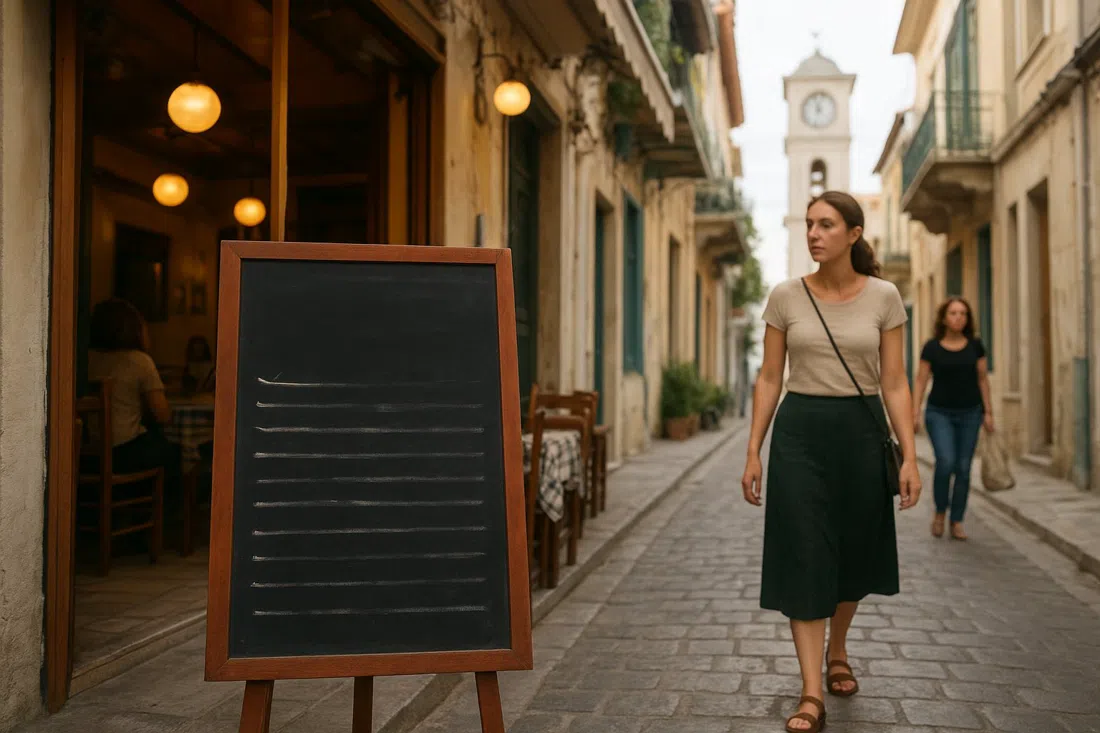
Then there is Dodekapiata, the most Koukaki idea of all. On a side street off Odissea Androutsou, the menu is literally a chalkboard of twelve dishes, reset at each new moon. The concept is neat, almost stubbornly so: a kitchen that follows the lunar month, a reservation that matters, and the quiet thrill of arriving to find the board changed again. It is the sort of place that gives the neighbourhood its reputation for being informed without being showy.
For a different register, Mani Mani occupies a neoclassical room near the Acropolis and turns the cooking of the Mani peninsula into something refined and deeply local. Handmade siglino-and-orange pasta and Laconian cheeses root it firmly in the south of the country, but the room itself feels like a bridge between old Athens and the more exacting present. Esthiō, on Dimitrakopoulou 7, goes another way again, with Greek-with-Balkan cooking from chef Elvi Dimitris Zyba. Smoked Florina-pepper byrek and squid-ink trahana give the menu a sharper, more regional edge.
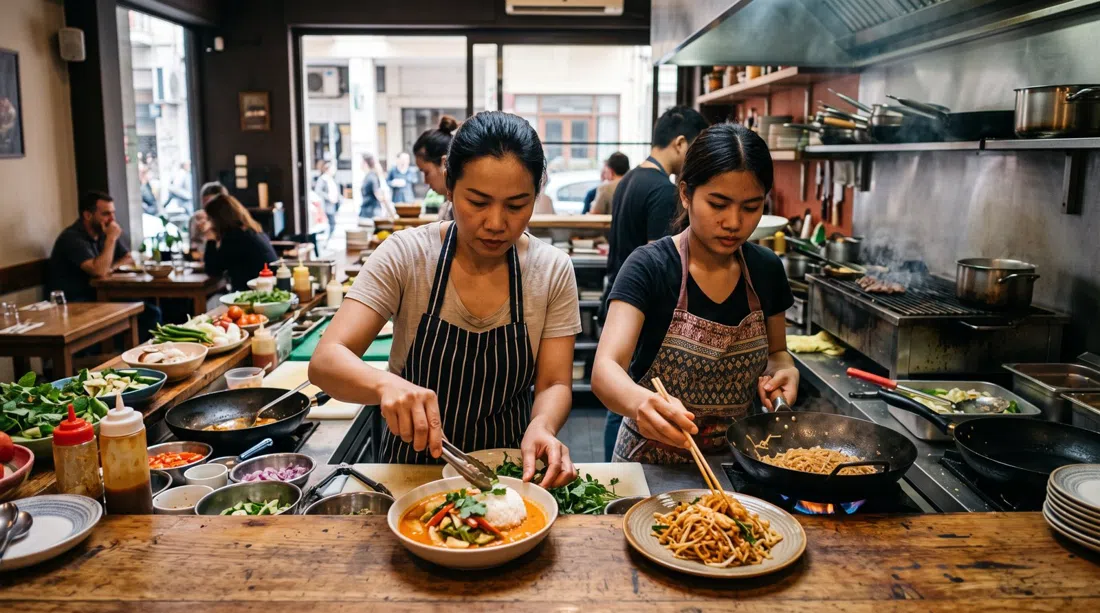
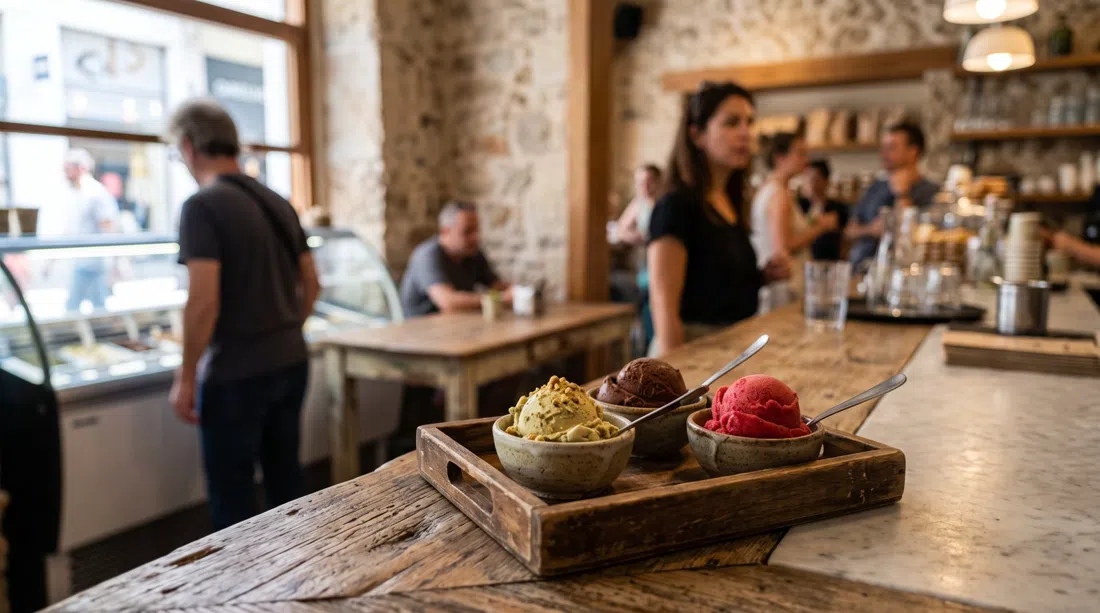
For casual meals that still matter, Tuk Tuk on Veikou 40 brings punchy, generous Thai from an open kitchen into a colourful room, while Guarantee on Veikou 41 has been doing the opposite of fuss since 1988: a family-run sandwich institution using bread from the local Takis bakery. Ellinika Kaloudia on Chatzichristou 8 is the deli-grocer to know for regional specialities, local wines, honey and pasta. And when you need something cold and small-batch at the end of the day, Django Gelato on Veikou 15 makes gelato on site and serves it within a day, which is exactly the kind of detail that makes a neighbourhood feel lived in.
Going out
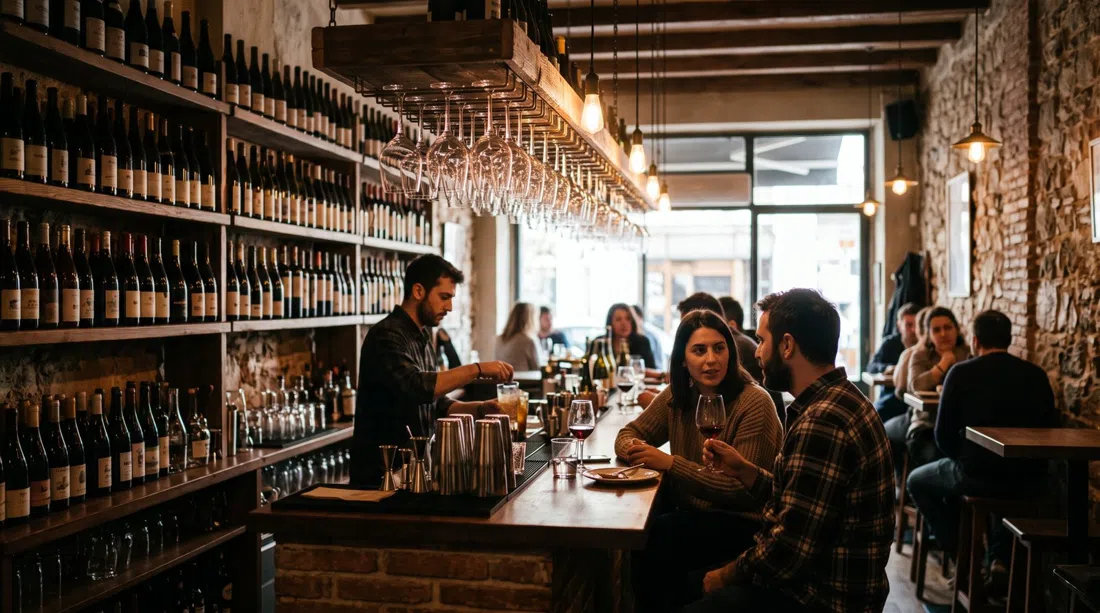
Koukaki’s night is not a club night. It is a wine night, and that distinction matters. The neighbourhood has become, more than anywhere else in Athens, the home of the natural-wine bar, and the atmosphere is all the better for it: low-lit, conversational, a little serious about bottles but never stiff. Materia Prima on Falirou 68 is the benchmark. Part wine shop, part bistro, it carries a cellar of roughly 800 labels and about 40 pours by the glass starting around €5, with Greek-French small plates to keep the bottles company. It fills early, stays warm and dim, and has the kind of high-ceilinged, glass-hanging interior that makes a room feel busy without feeling loud.
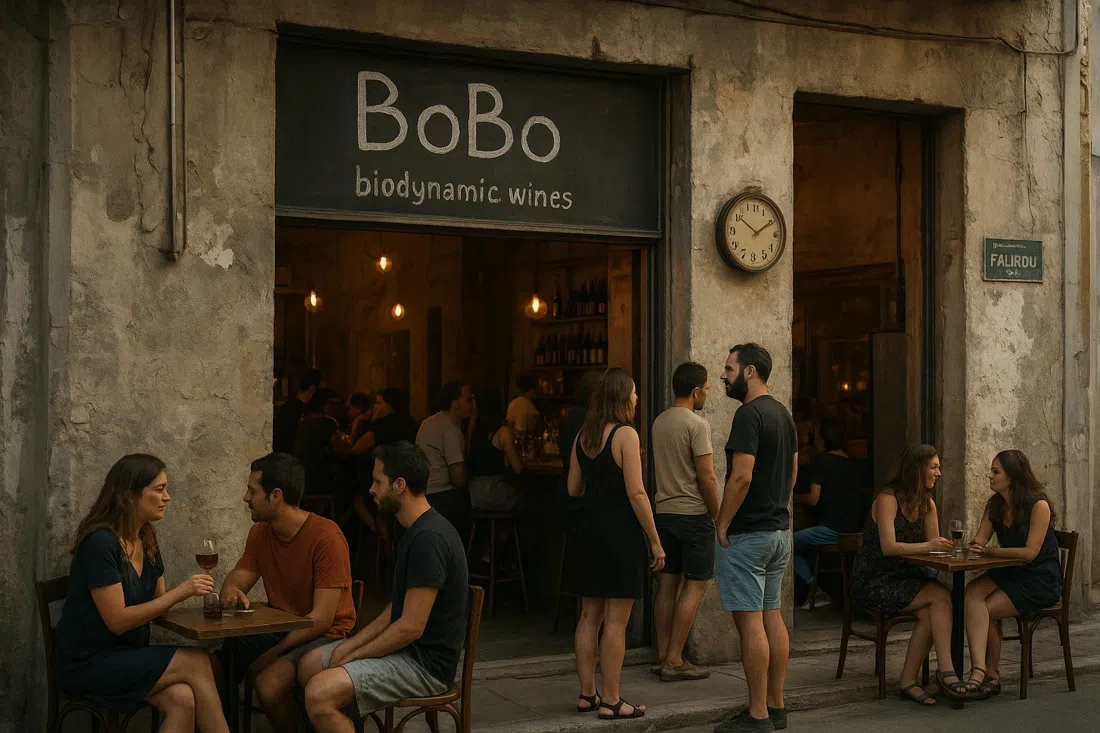
BoBo, a few doors along on Falirou, shifts the mood toward biodynamic and orange wine, and does it from a converted garage. Around 25 organic and biodynamic wines by the glass are chalked up daily, with carpaccios and salads to graze on, and the place has the loose, bohemian feel that suits its name. It is not trying to be a spectacle. It is trying to be a good evening.
For the pre-dinner ritual, Drupes Spritzeria on Zitrou 20 does the Italian aperitivo properly: cold spritzes, bruschetta, cheese and cured meats, with the bonus of opening early for coffee because it began life as the caffetteria for the family bakery next door. That family-bakery origin story is very Koukaki — practical, local, and mildly proud of itself.
The livelier social energy gathers around Koukaki Square and along Georgaki Olympiou and Drakou, where cocktail bars and café-bars push their tables under the trees and stay busy late. Even then, the tone remains convivial rather than raucous. You drink well, you sit outside, and you can still hear the person across the table.
Things to do
The essential outing is already waiting on the doorstep. The Acropolis Museum on Dionysiou Areopagitou is Bernard Tschumi’s glass-and-concrete landmark, and the reason it feels so compelling is simple: the Parthenon marbles are displayed on the top floor in the temple’s true orientation, with the rock itself visible through the windows above. It is one of those rare museums that does not just house the past but stages a conversation with it.
From there, the Dionysiou Areopagitou promenade curves around the base of the Acropolis. Pedestrianised and café-lined, it is the classic approach to the ancient site and to the theatres cut into the southern slope. The walk is short, but the effect is large: Athens opens out around you in layers, from contemporary museum glass to ancient stone to the city’s everyday life just beyond.
Koukaki’s green lung is Filopappou Hill, the Hill of the Muses, on the western edge. It is pine-covered, threaded with Dimitris Pikionis’s hand-laid stone paths, and better than most city walks because it never feels like a performance. This is the local sunset climb, quieter and more relaxed than Lycabettus, with the 2nd-century Philopappos Monument offering a wide, low view straight across to the Acropolis glowing gold at dusk. The Pnyx and the little church of Agios Dimitrios Loumbardiaris sit on its flanks, and the whole place feels like a memory of Athens rather than a monument to it.
On the cultural edge, the National Museum of Contemporary Art, or EMST, occupies the old Fix brewery on Kallirois Avenue and brings Greek and international contemporary work into a space with its own industrial history. Nearby, Onassis Stegi on Syngrou Avenue adds theatre, dance and boundary-pushing exhibitions in a marble-clad arts centre that has become one of the district’s contemporary anchors. For something smaller and more specific, the Ilias Lalaounis Jewellery Museum on Kallisperi traces a celebrated Greek goldsmith’s work through Minoan and Byzantine motifs, and rewards the traveller who likes their museums intimate rather than monumental.
Shopping & markets
Shopping in Koukaki is not about ticking off a list. It is about drifting. Dimitrakopoulou and Veikou are the streets to wander, because they hold the neighbourhood’s everyday life: the Takis bakery, greengrocers, small shops and the kind of concept stores and ceramic studios that appear when a creative crowd settles somewhere for real. You can buy a hand-printed tote or a piece of local pottery a few doors from a laiki stall of tomatoes, and that mix is exactly the point.
Ellinika Kaloudia on Chatzichristou 8 deserves a second mention here, because it functions as both deli and shorthand for the neighbourhood’s appetite: Greek honey, cheese, pasta, local wines and small-producer goods, all hand-picked rather than stacked for tourists. If you want a neighbourhood to tell you what it values, a shop like this is a good place to start.
For a proper market moment, time your wander around the weekly laiki, the roving Greek street market of fruit, vegetables, fish and flowers. It sets up in the neighbourhood on its scheduled morning, though the day and street move, so ask locally. The market is one more reminder that Koukaki remains a place where people shop for life first and memory second.
Where to stay in Koukaki
Koukaki is the smart, slightly insider choice for Athens. It is as central as you would want for the Acropolis, but calmer, more local and generally better value than Plaka a few hundred metres north. The area runs to design hotels, boutique guesthouses, serviced apartments and B&Bs rather than big-name luxury towers, which suits its scale and its mood.
The prime pocket is the block or two just south of Dionysiou Areopagitou and the Acropolis Museum. Stay there and you are a flat five-minute walk from the ancient sites while still sleeping on a quiet residential street, with a handful of rooftops looking straight at the Parthenon. Deeper into the grid, around Georgaki Olympiou, Drakou and Koukaki Square, you trade the marble-view premium for being in the middle of the eating and drinking, with the wine bars and bistros on your doorstep. The eastern edge along Syngrou Avenue is where the larger, newer hotels cluster and where the metro is closest, but it is also the busiest and loudest strip, so ask for a room off the avenue if quiet matters.
Getting around
Koukaki is small and flat, and the honest answer is that you will walk almost everywhere. The Acropolis Museum, the Acropolis itself, Plaka and Monastiraki are all a 5–15 minute stroll north, and Filopappou Hill is on the western edge. That is the neighbourhood’s great practical luxury: the city’s most famous sights are close enough to feel spontaneous rather than scheduled.
For the metro, two stations on Line 2, the red line, bracket the neighbourhood: Acropoli on the northern side, handy for the sights and for crossing the centre, and Syngrou-Fix on the eastern side by Syngrou Avenue, which is also served by the tram down to the coast. Both put you two or three stops from Syntagma and the transfer to Line 3 for the airport. To reach Athens International Airport, change at Syntagma and ride the M3 out — roughly 45–50 minutes end to end — or take the direct X95 express bus from Syntagma, about an hour depending on traffic. A taxi or ride-hail from Koukaki to the airport is around 35–45 minutes on a clear run.
Within the neighbourhood itself, skip the car. The best streets are pedestrianised, parking is scarce, and everything worth reaching is on foot. That is part of Koukaki’s appeal: it is a neighbourhood that asks you to slow down just enough to notice the plane trees, the wine lists, the museum glass and the evening light on the Acropolis above it all.