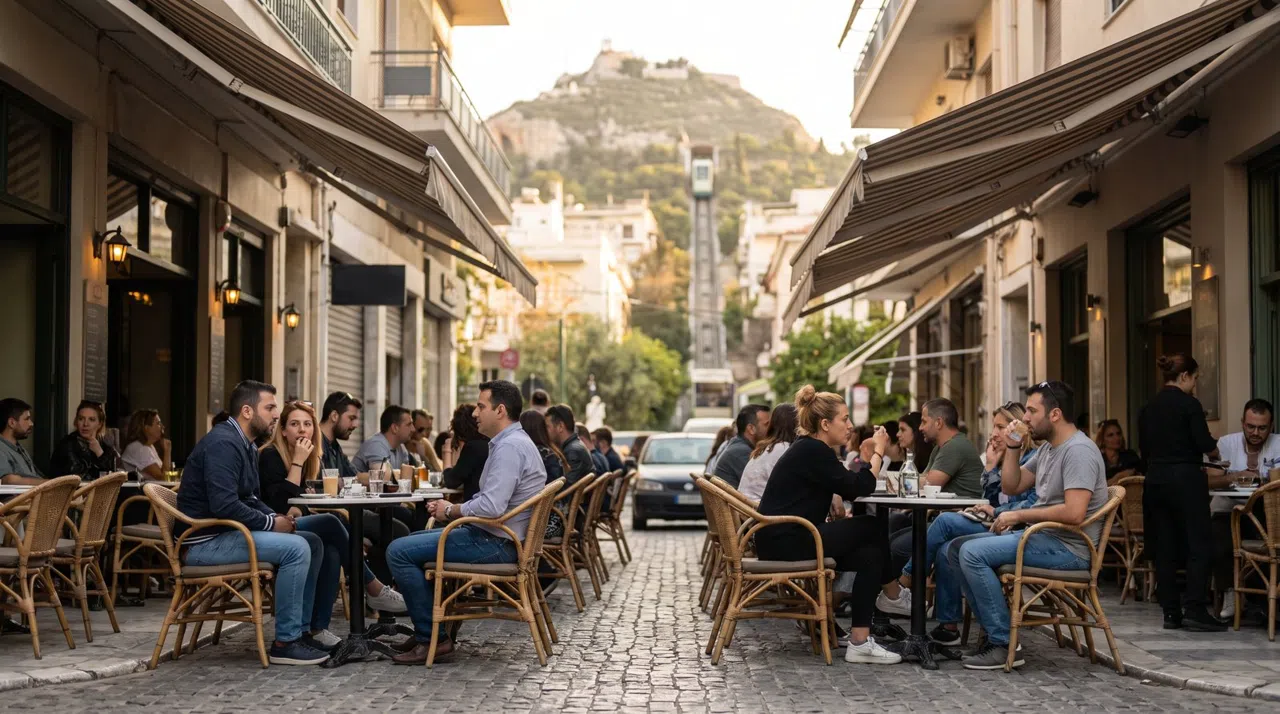
Follow the streets uphill from Vasilissis Sofias and the city seems to change register. The pavements narrow, the shopfronts sharpen into Dior and hand-made Greek jewellery, and the coffee costs a euro more. Kolonaki is Athens with its collar buttoned: a wedge of neoclassical blocks between Syntagma and the pine-covered flank of Lycabettus where old Athenian money, gallery owners and off-duty politicians share the same freddo cappuccino. It wears its status lightly, but unmistakably. The soundtrack is café chatter and the clink of glassware on marble-topped tables rather than thumping bass; the mood is polished, walkable, and just self-regarding enough to feel like a place with standards.
What Kolonaki is known for
Kolonaki’s name means “little column,” a nod to the small ancient column still standing on the central square, but the real story is what has grown around it: luxury retail, café society and a serious concentration of art. This is where Athens goes to shop, to look at art, and to be seen doing both. Voukourestiou is the city’s premier luxury street, dropping from the square with international houses and long-established Greek jewellers side by side, while Skoufa and Tsakalof carry the neighbourhood’s social life in their cafés and boutiques. The crowd skews well-heeled and local rather than backpacker: intellectuals, art-world figures, luxury shoppers and the occasional celebrity at a corner table. It can feel slightly self-regarding, yes, but the substance is real, and that substance is one reason Kolonaki remains one of the city’s most desirable addresses.
What makes Kolonaki compelling is the way the polish sits beside the serious. The neighbourhood is home to two of Athens’ best museums, a century-old taverna, an open-air cinema in a garden square, and the funicular that carries you to the highest view in the city. It is also steep — the lower streets are lively and compact, but the upper lanes around Charitos and Dexameni Square grow quieter, greener and cooler as they climb the Lycabettus slope. That geography matters. In summer heat, the difference between a terrace below and a terrace above can feel like a small mercy.
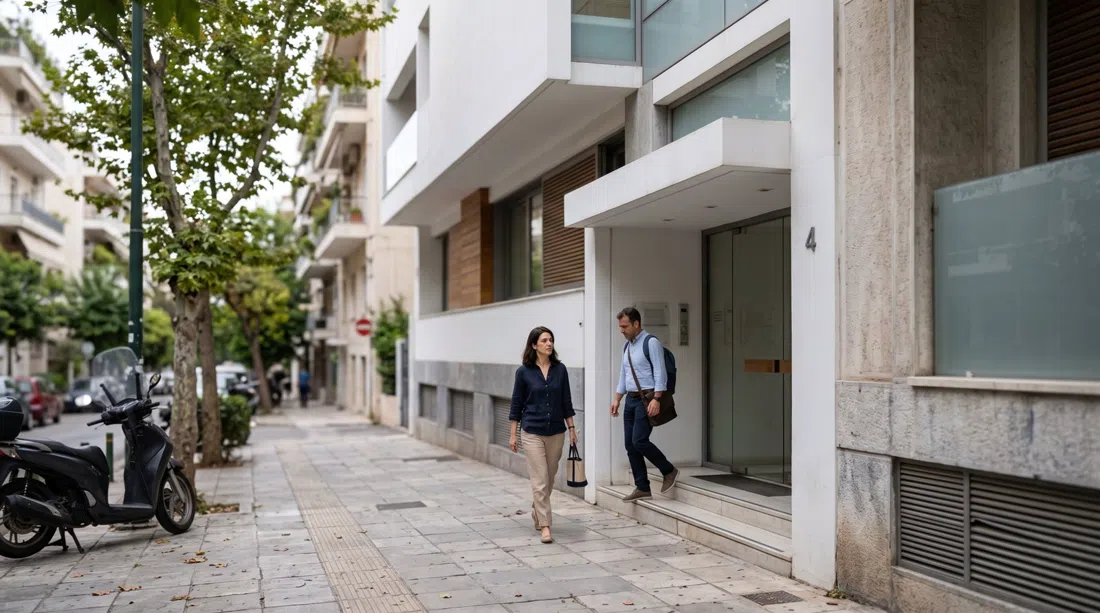
The neighbourhood’s architecture adds to the mood: handsome pre-war apartment blocks and townhouses, with fashion flagships at street level and design galleries tucked into ground floors. It is not a district that tries to seduce with chaos. It seduces with order, with good light on stone, with the confidence of a place that knows exactly what it is.
Where to eat & drink
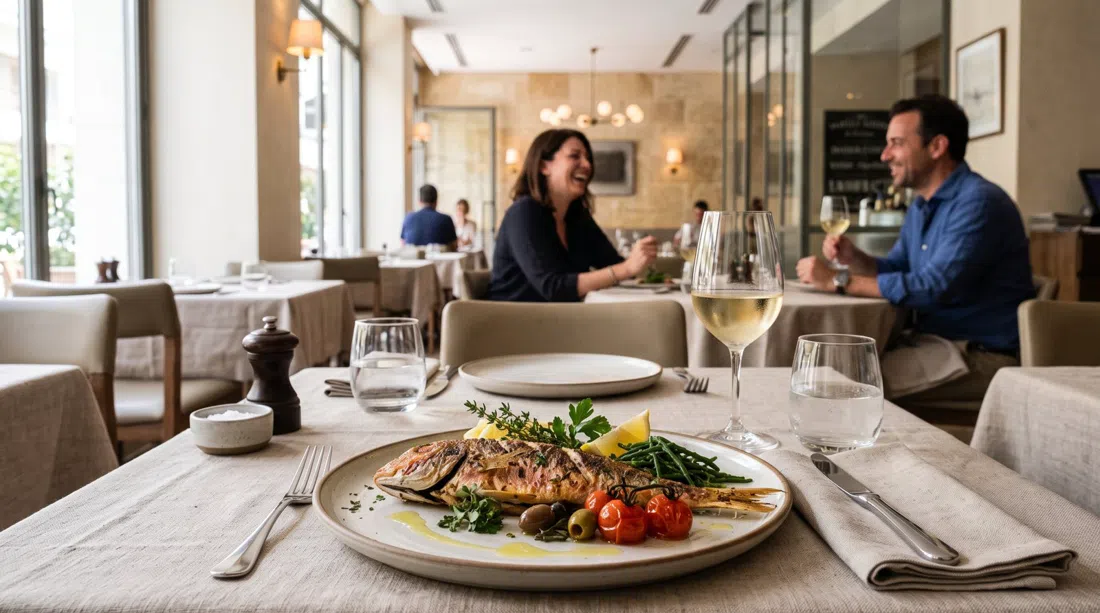
Kolonaki eats well without ever pretending to be casual about it. The old guard is still here, and it sits comfortably alongside newer, more polished kitchens. Start with Taverna Filippou on Xenokratous 19, open since 1923 and beloved for honest mageirefta: moussaka, ladera vegetables cooked in olive oil, whatever the market gave up that morning. The room has the air of a place that has seen ministers, diplomats and regulars for generations, but the prices remain fair and the mood unforced. It is the kind of taverna that reminds you how much of Athenian life is built around the daily meal rather than the destination dinner.
Oikeio on Ploutarchou 15 takes traditional Greek cooking and gives it a Bib Gourmand sheen without losing generosity. It is well-priced, cheerful and bistro-like in the best sense: a place where you can settle in and order with confidence, knowing the food will be familiar but not dull. For seafood, Iodio on Loukianou 36 is a more refined proposition, with chef Georgianna Hiliadaki — formerly of the two-Michelin-star Funky Gourmet — turning out seasonal fish and dishes such as sea-urchin risotto. Papadakis on Fokylidou 15 is another long-running fish specialist, tucked on a quiet corner and valued for exactly that sort of steady, focused cooking. These are the addresses that keep Kolonaki from becoming all gloss and no appetite.
For something quicker, Kalamaki Kolonaki on Ploutarchou 32 grills a smarter-than-average souvlaki, including Black Angus and salmon skewers, under an olive tree. That detail — the olive tree — matters because Kolonaki, despite all its polish, still likes a bit of shade and a bit of wit. Wild Souls, on the corner of Irodotou and Karneadou, answers the plant-based crowd with an entirely vegan deli built around house-made nut butters and halva. It is the sort of place that fits the neighbourhood’s wellness-conscious, design-aware streak without feeling like a trend imported from elsewhere.
Coffee is where Kolonaki performs itself most openly. Da Capo on Tsakalof is the institution: self-service, green-marble and pure Kolonaki theatre, the place to watch the neighbourhood watch itself. Filion on Skoufa 34 is the older, calmer coffee house, less showy and perhaps more forgiving on a slow morning. Désiré, at Dimokritou 6, has been a patisserie since 1962 and is the place for millefeuille and syrupy sweets, the sort of sugar that makes sense after a long lunch or before a late walk uphill.
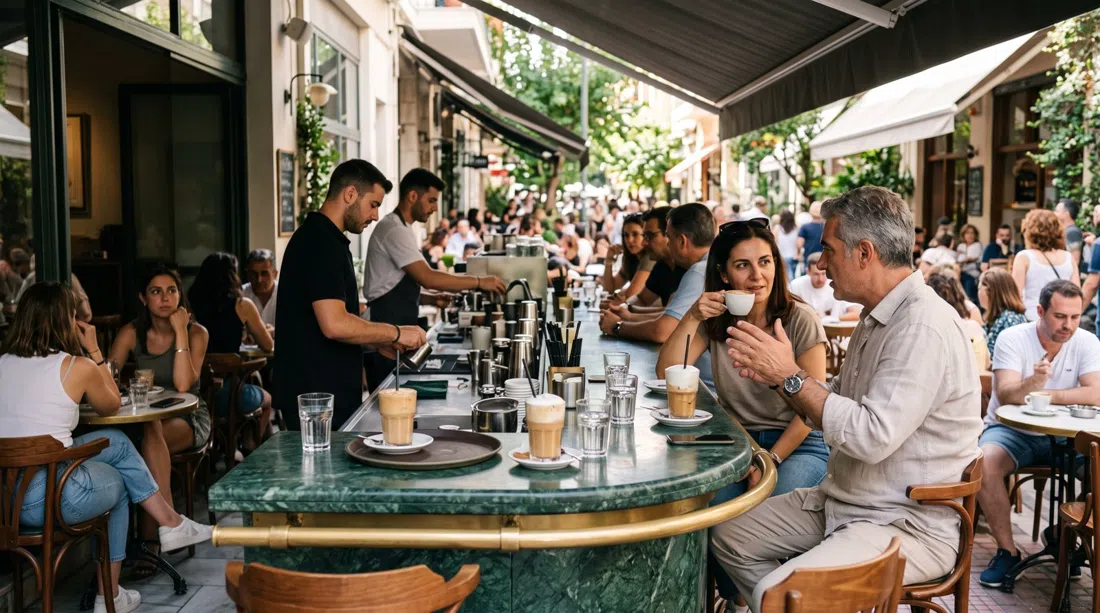
By early evening, the terraces fill again. The same streets that hosted newspapers and small dogs in the morning now hold sharply dressed after-work crowds nursing negronis before dinner. Kolonaki is not a neighbourhood that rushes its appetite. It prefers to extend it.
Going out
Kolonaki’s evenings are about cocktails and conversation rather than dance floors. This is a district that does sophistication, not sweat. The best bars understand the assignment. Jazz n Jazz on Deinokratous 4 is a snug shrine to vinyl and whisky, low-lit and vintage, with music doing the talking and the room staying deliberately intimate. Grain on Omirou 33 is genuinely tiny and cosy, the kind of place for a well-made drink after work rather than a big night out. Ratka on Charitos 30–32 is a Kolonaki survivor, a restaurant-bar that has kept its old-guard regulars and late-night energy for decades.
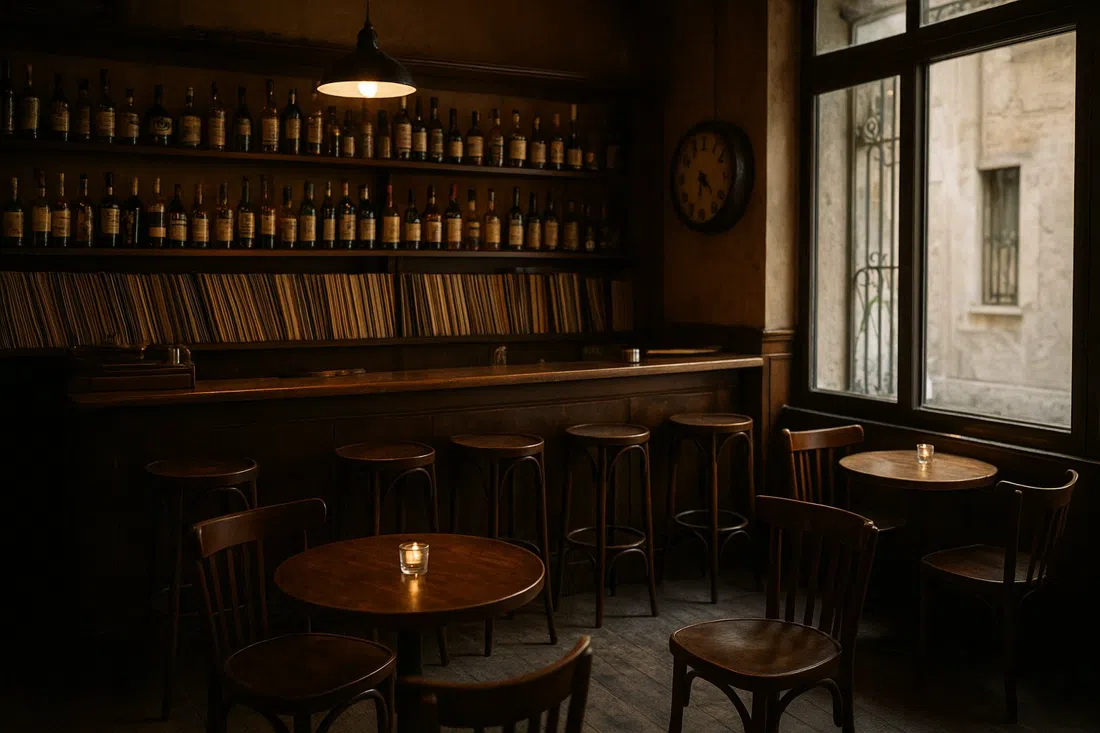
When the square’s terraces empty around midnight, most people drift a few minutes downhill toward the centre for a serious cocktail. That is where The Clumsies comes in: on Praxitelous, a short walk below Kolonaki toward Syntagma, it is a perennial fixture on the World’s 50 Best Bars list and probably the single best cocktail address within easy reach of the neighbourhood. If you want a club night, this is not the quarter for it; Gazi and Psirri are the names to know. Kolonaki’s promise is different. It gives you a polished evening that starts with a drink, stretches into dinner, and ends without any need to shout over a bassline.
Things to do / what to see
The two unmissable stops are museums. The Museum of Cycladic Art on Neofytou Douka 4 is compact and superbly presented, and its 5,000-year-old marble figurines are among the most beautiful objects in Athens. There is a pleasant café for a pause, which feels exactly right after so much quiet precision. The museum’s scale is part of its charm: you can give it proper attention without feeling hurried, and the objects themselves — those minimal, enigmatic figures from the Aegean islands — have a stillness that suits Kolonaki’s more contemplative side.
A few minutes away, the Benaki Museum of Greek Culture at Koumbari 1 runs from prehistoric gold through Byzantine icons to the revolution of 1821. It is a sweep of Greek history that makes the city’s long continuity feel tangible rather than abstract, and the rooftop café overlooking the National Garden gives the visit a graceful ending. Together, these two museums explain why Kolonaki is such a strong base for travellers who want their Athens to be more than a checklist of monuments.
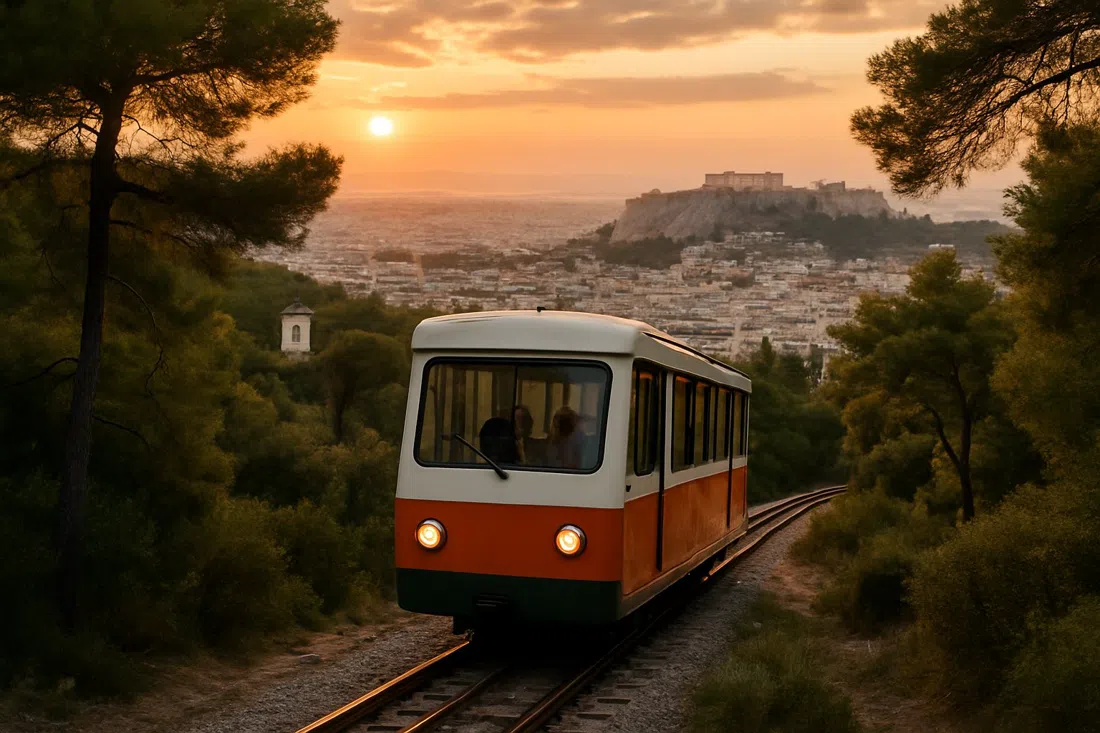
Then there is Mount Lycabettus, the neighbourhood’s dramatic punctuation mark. The funicular railway climbs from the top of Kolonaki, near the corner of Aristippou and Ploutarchou streets, to a whitewashed chapel and the highest viewpoint in the city. The view is the reason to go: the Acropolis, the sprawl of Athens and the Saronic Gulf laid out below. It runs late into the night, but sunset is the moment to aim for, when the city begins to glow and the Acropolis floodlights snap on. A one-way ride is around €9, a return about €12. The fittest can walk up through the pines in 25–35 minutes and take the funicular down.
Down at Dexameni Square, on the neighbourhood’s leafy upper edge, sits Cine Dexameni, one of Athens’ loveliest open-air summer cinemas. It screens independent films under the trees with a drink from the adjoining café, and the whole setup feels like a private reward for anyone willing to climb a little higher than the city’s obvious routes.
Shopping
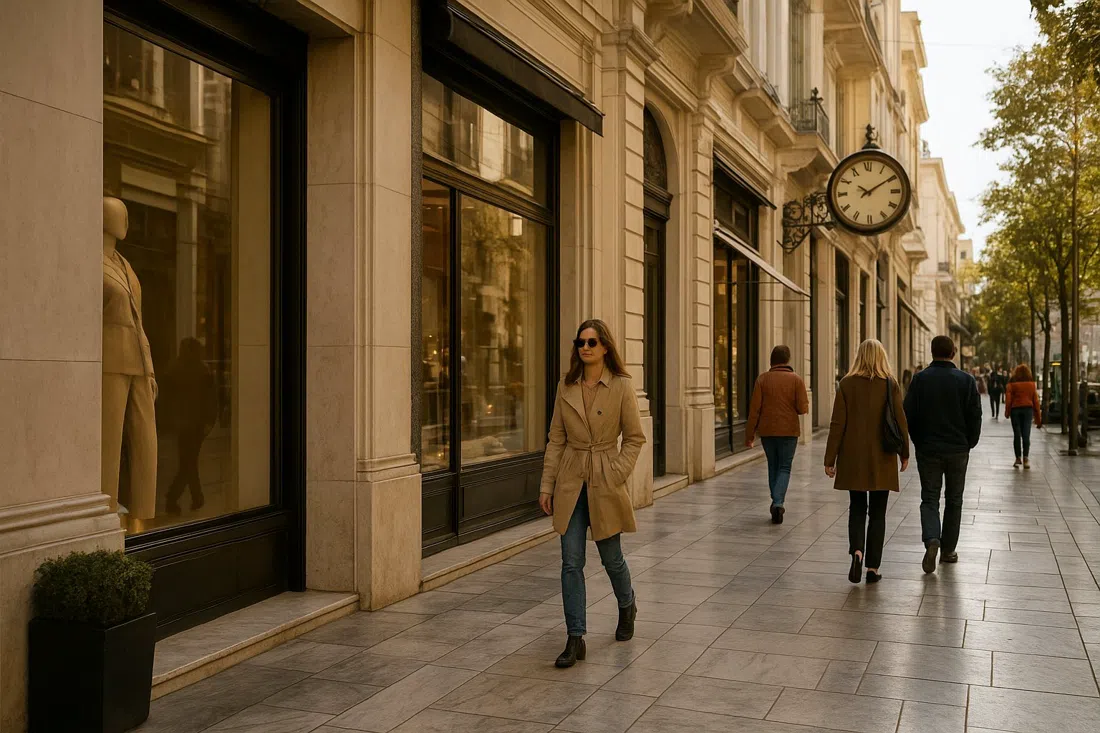
Kolonaki is the best shopping in Athens, full stop. Voukourestiou is the luxury spine, lined with international flagships and generations-old Greek jewellers — this is where the city keeps its Dior, Cartier and Louis Vuitton alongside home-grown fine-jewellery names. The flagship of Zeus + Dione at Voukourestiou 6 deserves special attention because it makes everything in-country and blends traditional craft with modern tailoring. That combination, of heritage and precision, feels very Kolonaki: polished, contemporary, but still anchored in local skill.
Skoufa and Tsakalof run parallel across the neighbourhood and mix designer boutiques with independent shoe shops, concept stores and the cafés you’ll rest in between. The upper streets toward Lycabettus hide smaller finds — independent jewellers and design shops on quieter blocks like Irodotou and Charitos. This is a place to browse rather than bargain-hunt. Prices are full, and part of the pleasure is in the window-shopping and the well-dressed foot traffic passing by as if the street itself were a runway for everyday life.
Kolonaki’s retail scene is less about conquest than atmosphere. You can drift from a gallery to a jeweller to a café without ever feeling the need to justify the detour. That ease is part of the appeal.
Where to stay in Kolonaki
Kolonaki is an elegant, safe and very central base, and it comes at a price. Expect to pay more here than in Koukaki, Pangrati or Psirri for a comparable room. The trade-off is obvious: you get calm, polish and some of Athens’ best museums and shopping on the doorstep. It suits travellers whose trip leans on museums, shopping and quiet evenings rather than budget or backpacker energy. The streets around Kolonaki Square and along Skoufa put you in the thick of the café scene and within a short, flat-ish walk of Syntagma and the metro. For something quieter and greener, look higher up toward Dexameni Square and the streets on the Lycabettus slope — more peaceful and residential, though you will be climbing home.
It is worth remembering that the Acropolis and Plaka are only a 15–20 minute walk away, or one short metro hop, so Kolonaki works well if you’d rather sleep somewhere polished and stroll to the sights than stay in the busiest tourist core.
Getting around
The most useful metro station is Evangelismos on Line 3, the Blue Line, a roughly five-minute walk from the eastern edge of the neighbourhood and right by both major museums. Syntagma, the big interchange of Lines 2 and 3, is the other option, about a 12–15 minute walk up from the square via Kanari Street; from there you have direct trains to the airport on Line 3. A dedicated Kolonaki station on the new Metro Line 4 is under construction beneath the square, but it is not expected to open until the end of the decade, so for now everything runs through Evangelismos or Syntagma.
Within Kolonaki you walk. It is compact but steep, and the climb back up from the square in summer heat feels longer than the map suggests, so save the uphill streets for cooler hours or take the funicular for the Lycabettus leg. Central Athens — Plaka, the Acropolis, Monastiraki — is a 15–20 minute walk or a single metro stop. The airport is about 45 minutes by Line 3 from Syntagma or Evangelismos. In other words: this is one of those rare city neighbourhoods where you can keep your days almost entirely on foot, provided you respect the hill.
Kolonaki is not Athens at its most boisterous. It is Athens at its most composed: café tables on marble, museums with real depth, boutiques that know their own worth, and streets that climb toward a view worth the effort. If you want the city to feel elegant without losing its substance, this is where it happens.