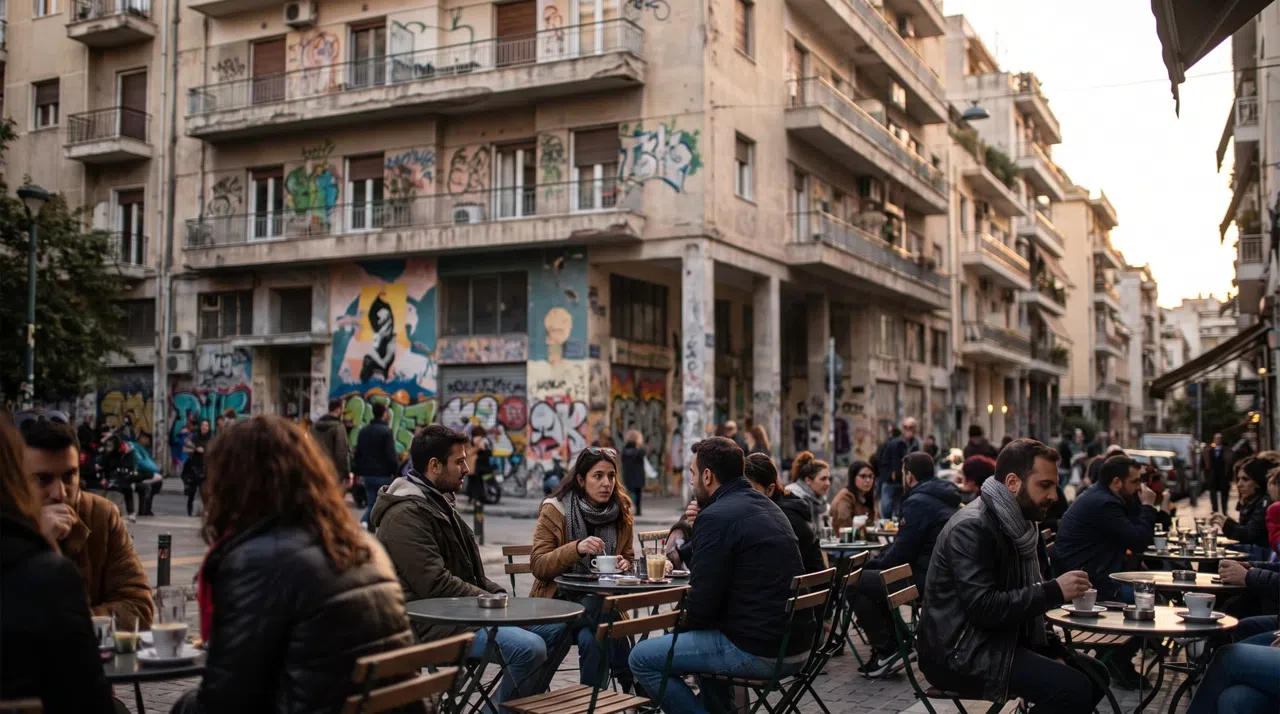
On a Saturday morning, Kallidromiou Street tilts into life under orange tarps, and Exarcheia starts to sound like itself: tomatoes being haggled over, crates scraped into place, voices bouncing off graffiti, the city waking up in argument and appetite. A few streets away, the Athens Polytechnic still carries the memory of the 1973 uprising that helped crack the dictatorship open. That is the paradox that gives this district its charge. Exarcheia is Athens with its collar unbuttoned — bookish, political, loud, stubborn, and too self-aware to pretend otherwise.
What Exarcheia is known for
Exarcheia is Athens’ countercultural and intellectual heartland, and it wears that identity on every wall. The neighbourhood grew around the National Technical University of Athens, better known as the Polytechnic, and the history of November 1973 still sits close to the surface. The student uprising against the military junta was crushed when an army tank crashed through the gates, and every 17 November the march that commemorates it ends here. In Exarcheia, memory is not tucked away in a museum label. It is painted over, pasted up, shouted about and argued over at café tables.
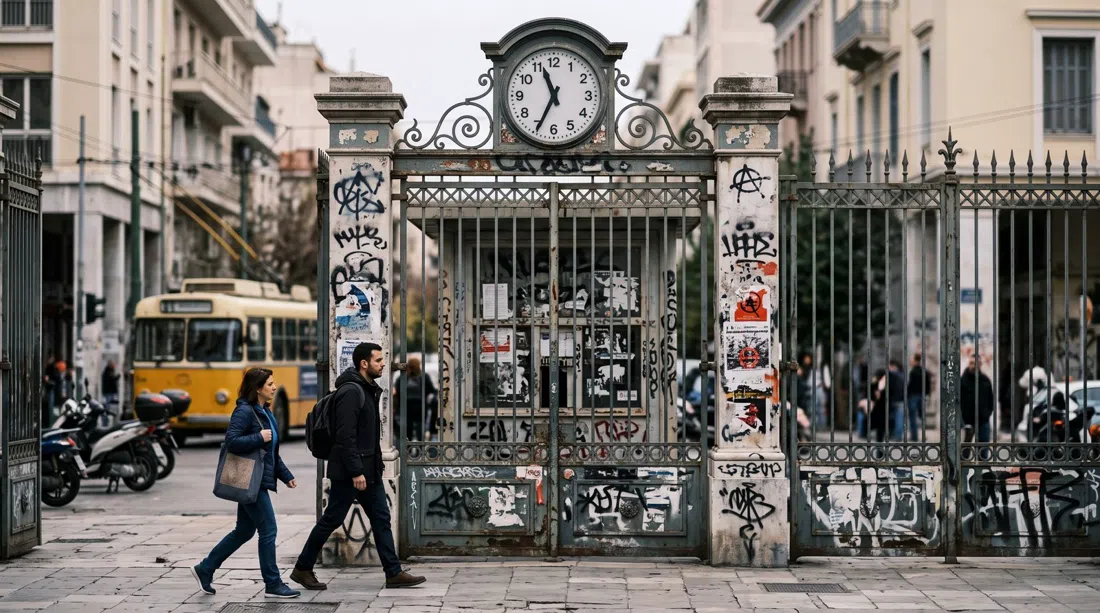
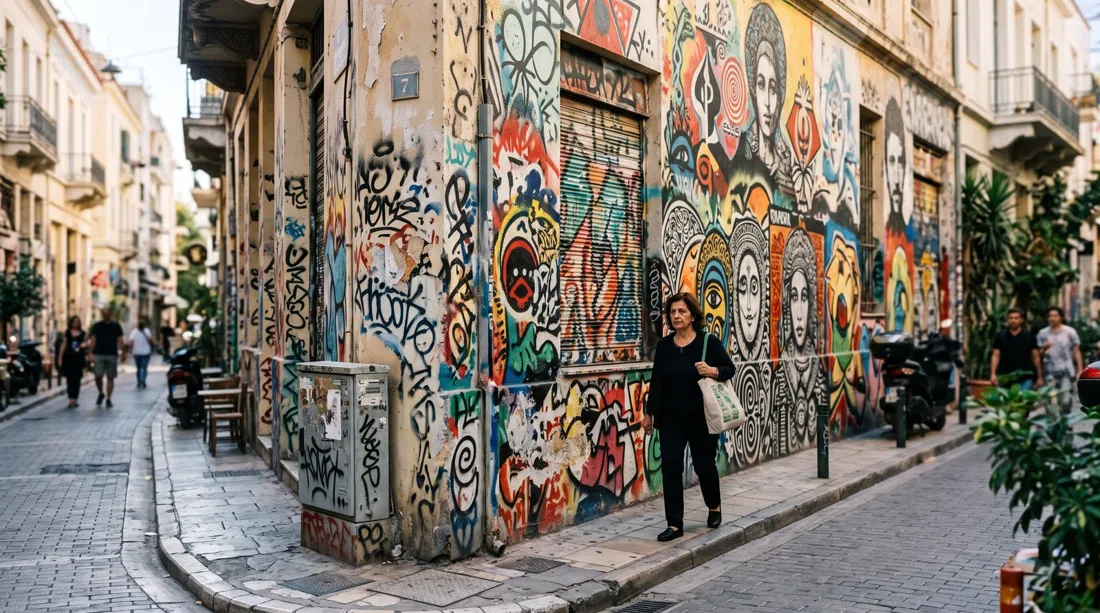
The area’s walls tell the rest of the story. Political murals and dense graffiti cover almost every façade, and the effect is less decorative than conversational, as if the neighbourhood is permanently mid-debate. Exarcheia Square, Plateía Exarcheíon, is the centre of that conversation. It is not a polished civic plaza but a living room, ringed by cafés, benches and the kind of people who know exactly how long they intend to stay. Old men play backgammon, teenagers arrive with skateboards, someone hands out a flyer, and the square keeps absorbing it all. A contested metro station has been under construction here since 2022, and locals frame the fight around it as a fight against gentrification. Around the edges, change is real; at the core, the neighbourhood remains defiantly itself.
What makes Exarcheia compelling is not one single symbol but the way its layers coexist without apology. The National Archaeological Museum stands on its western edge with the Antikythera Mechanism, the Mask of Agamemnon and Mycenaean gold, while just a few streets over you find anarchist collectives, antiquarian booksellers, natural-wine bars and 24-hour souvlaki counters sharing the same block. It is one of the few places in Athens where the intellectual, the improvised and the everyday remain in active conversation.
Where to eat & drink
Eating in Exarcheia is rarely about formality. It is about long meals, cheap drinks, grills that never quite cool down, and courtyards that make you linger longer than planned. The strongest meals here often happen in places with no obvious glamour at all, which is part of the charm.
Ama Lachei stis Nefelis is the kind of place that explains Exarcheia in a single sitting. Set in the courtyard and rooms of a former neighbourhood primary school at the foot of Strefi Hill, it offers no mains and no reservations, only a long list of meze and Greek wines. That means you arrive, wait if you have to, and settle into the rhythm of the place. It is scrummy, unpretentious and deeply of the neighbourhood.
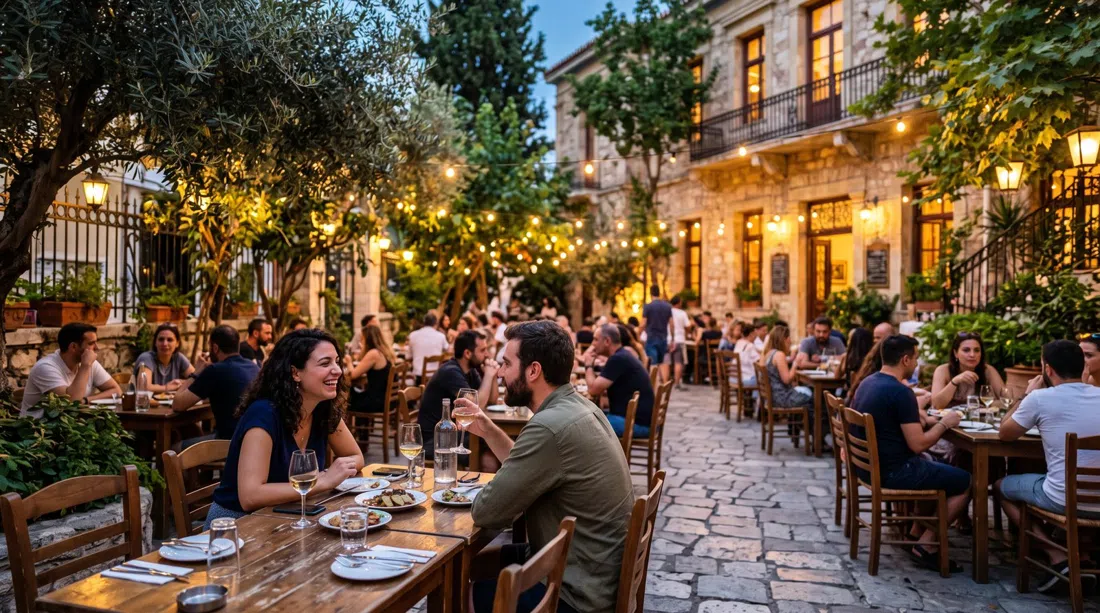
On Valtetsiou Street, Rozalia has been feeding the area since 1978 from a leafy garden the owner planted himself. It is the sort of taverna that earns loyalty by being consistent: grilled meats, mezedes and a no-preservatives kitchen, all delivered without fuss. A few doors along, Yiantes at Valtetsiou 44 takes a slightly more modern line, but still feels rooted in the district’s appetite for honest cooking. It was a pioneer of organic food in Athens and now turns out Greek dishes with a light contemporary touch — wild greens, fresh fish, lamb — in a pretty walled courtyard.
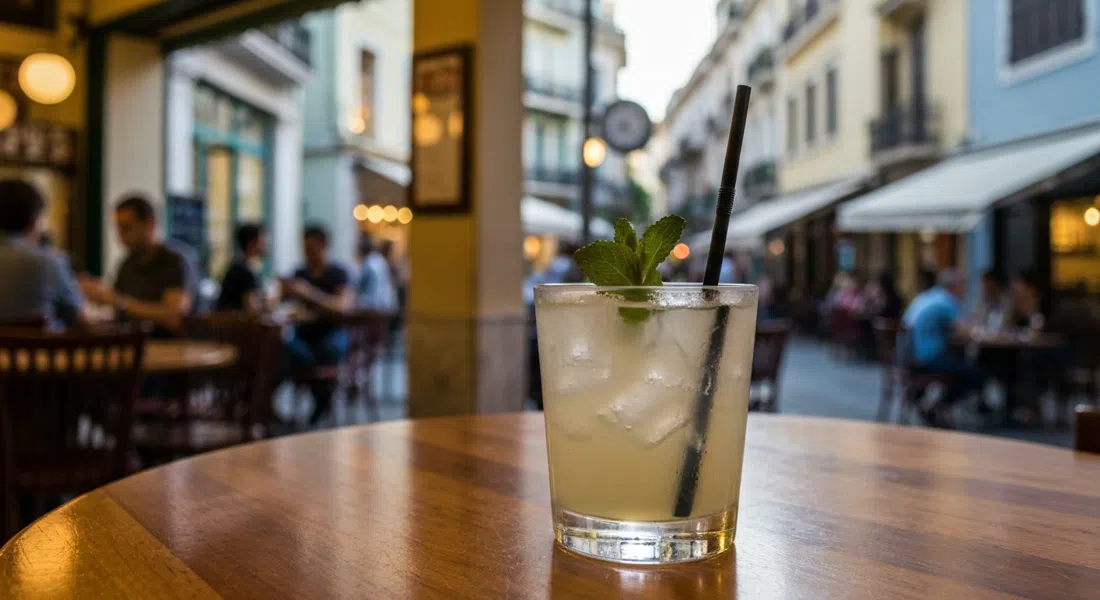
For daytime drift and late drinks, the square and its side streets carry the neighbourhood’s social life. Blue Bear is the obvious move for a cocktail right on the plateia, while Alexandrino, just around the corner, brings a retro bistro feel and a pisco sour with a reputation of its own. Tigre handles specialty coffee and brunch with a cheerful, easygoing energy, and Sepia Art Café keeps things artsy and budget-friendly with tea, cheap cocktails and a creative crowd that looks as if it has come straight from a zine launch.
Wine has become a serious part of the neighbourhood’s conversation too. Warehouse, going since 2014, is an unpretentious industrial-design wine bar with a long by-the-glass list, the sort of place where you can drop in for one glass and stay for three. Gamay, opened in late 2023 inside a preserved 1928 Art Deco house, pours more than 120 labels and serves small plates; it feels like a newer, more polished layer of Exarcheia without pretending to erase the older one.
And then there is the square’s necessary after-hours ritual: Kavouras, the late-night souvlaki counter on the square, which never really closes. It is the kind of place that becomes invisible to visitors until midnight, when it suddenly feels like the most important restaurant in Athens.
Going out
Nightlife in Exarcheia is music-led, cheap and gloriously unglamorous. This is not Kolonaki’s polished cocktail circuit. Here, the night is organised around rembetiko, the smoky Greek blues that suits the neighbourhood’s melancholy-romantic streak so well it can feel almost inevitable.
Kavouras is the institution. Started in 1969 by a group of musicians, the bar above the souvlaki joint runs live music roughly from Thursday to Sunday and keeps the crowd until around 3am. The room is built for staying, not posing: food is cheap, the music is close, and the atmosphere is one of those rare urban mixtures where strangers sing along without embarrassment.
O Aggelos occupies the first floor of a neoclassical building and keeps a live band on every night. On Saturdays, the actress Lena Kitsopoulou sings rembetika, which tells you almost everything you need to know about the place: this is nightlife with a theatrical edge, but still grounded in the old emotional grain of the music. Around it, the square’s bars and benches fill with drinkers who are happy to let the evening spill onto the pavement. Beer is cheap by central Athens standards, and there is no particular rush to go anywhere else.
Warehouse and Gamay carry the wine crowd into the evening, while Blue Bear, Alexandrino and Sepia handle cocktails with varying degrees of polish and irony. The pleasure is not in choosing the perfect venue so much as in moving between them. Exarcheia is a neighbourhood you go out in rather than to: a taverna, a bar, a basement gig, back to the square, then perhaps one more souvlaki before the night gives up.
Things to do
The neighbourhood’s best attraction is the neighbourhood itself, but there are a few places where the story sharpens into something you can stand in front of.
Start with the streets around the square — Themistokleous, Mavromichali, Emmanouil Benaki and Kallidromiou — and read the walls as you walk. Exarcheia’s political and social street art is world-class and changes constantly, which means the district never feels frozen. A guided walk, such as those run by Alternative Athens and others, can add the activist context that turns the murals from decoration into testimony.
Then climb Strefi Hill on the northeastern edge of the neighbourhood. It is a pine-covered knoll with steep stone paths, a small open-air theatre and one of central Athens’ best free sunset views over the rooftops to the Acropolis. The hill’s wildness matters. A controversial regeneration plan from 2021 was struck down by Greece’s Council of State in late 2023, so it remains defiantly unlandscaped, more urban scrubland than ornamental park.
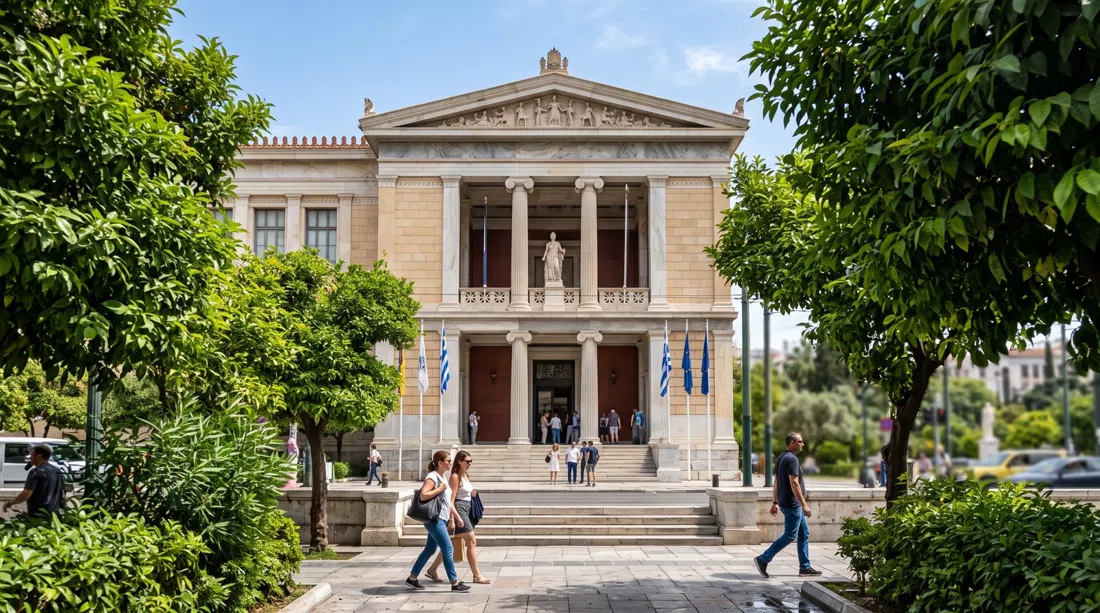
The National Archaeological Museum, on Patission Street at the western fringe, deserves a couple of hours on its own. It is Greece’s greatest museum, home to the Antikythera Mechanism, the Mask of Agamemnon and Mycenaean gold, and it gives the neighbourhood a strange and useful counterpoint: all that ancient order just beyond all this modern disorder.
For something quieter and more local, find Parko Navarinou, the self-managed community park created by residents on a former car park in 2009. It has a vegetable garden and a Blu mural, and it feels like a different kind of Athens entirely — one built by use rather than planning.
Finally, build a Saturday morning around the Kallidromiou laiki. Honey, herbs, olives, cheese and produce are sold up a graffiti-covered stepped street, and the market is half commerce, half social event. Even if you buy nothing, the atmosphere is the point: a hillside conversation in motion.
Shopping & markets
Exarcheia is Athens’ capital of the printed page and the pressed record. The neighbourhood’s intellectual culture has left it with a concentration of independent bookshops that feels almost old-fashioned in the best way. Political theory, poetry, art and architecture, history, comics and foreign-language titles spill across side streets and into shop windows, as if the district is still expecting to argue with itself in print.
The anchor is Politeia, the vast bookstore over toward Akadimias, with specialised departments and tens of thousands of Greek and foreign titles. It is the sort of place that rewards time, not efficiency. You go in for one subject and emerge with three more you did not know you were looking for.
Vinyl is the other Exarcheia obsession, and it never went out of fashion here. Discobole has been serving electronic-music heads since 1983, while Sound Effects Records and Le Disque Noir dig into new and second-hand stock across rock, rebetiko, folk and Greek pressings. Between them, the streets are dotted with vintage clothing, design second-hand shops, small comic and zine sellers, and independent presses. The neighbourhood is not curated retail; it is a working ecosystem of taste.
The weekly peak is still Saturday at the Kallidromiou laiki, where the market becomes the neighbourhood’s social hinge. If Exarcheia has a pulse, this is where you feel it most clearly — in the produce, the gossip, the arguments, the bargains and the simple pleasure of being in a street that belongs to its residents for a few hours.
Where to stay in Exarcheia
Exarcheia works best as a budget-leaning base with real texture. It sits directly behind the National Archaeological Museum and is a 10–15 minute walk from Syntagma, which means you are close to the centre without paying the centre’s usual premiums. That combination — location, character and lower prices than Plaka or Kolonaki — is the reason many travellers end up here and then stay longer than planned.
Expect small independent hotels, guesthouses and a strong budget and hostel scene rather than international chains. Simple, long-running places like Orion & Dryades sit up toward Strefi Hill, and there is a cluster of cheap rooms around the square and along Themistokleous. The key is to choose your street carefully. The immediate ring around Exarcheia Square and the bar streets is lively and loud well past midnight, so soundproofing matters. The calmer pockets up toward Strefi Hill and the museum end give you the same neighbourhood character with a better chance of sleep.
It suits younger, culturally curious and budget-minded travellers most. If you want polish, quiet or a family-friendly hush, this is probably not your place. If you want to wake up in a neighbourhood that still feels like it is thinking out loud, it makes a very persuasive case.
Getting around
Exarcheia is small, hilly and best understood on foot. It has historically sat just outside the metro network, and its own station on Exarcheia Square has been under contested construction since 2022 and is not yet open. For now, you use the stations that ring it.
Panepistimio on Line 2 and Omonia on Lines 1 and 2 are the closest, roughly a 10–12 minute walk from the square, while Victoria on Line 1 serves the northern end near the Archaeological Museum. From Omonia or Panepistimio you are only two or three stops from Syntagma, Monastiraki and the Acropolis, and Syntagma itself is about a 10–15 minute stroll downhill.
For the airport, take Line 3 from Syntagma or Monastiraki, which runs directly to Athens International Airport in about 40 minutes, or use the dedicated airport bus X95 from Syntagma. Within the neighbourhood, everything worth seeing is a few minutes on foot, though the climb up to Strefi Hill and the walk to Kallidromiou market will remind you that Athens is never entirely flat.